Date:Nov 23, 2026
Content
Pick up a plastic takeaway container, flip open the cap on a shampoo bottle, or snap the lid of a lunch box shut, and you have just used a living hinge. It is one of those quiet pieces of engineering that works so smoothly nobody notices it, right up until the day it cracks.
We build injection molding machines for a living, so conversations about parts like this come up constantly on the shop floor: thin, fussy, and completely dependent on the material, the tool and the process all agreeing with each other. What follows is the explanation we usually give in person, minus the noise of the factory. We will look at what a living hinge actually is, how it bends without breaking, which plastics survive the job, how the design rules work, and what to watch for when you mold one.
A living hinge, also called an integral hinge or a flexure hinge, is a thin flexible section of material that joins two thicker, rigid sections of the same part. Because the thin section is made of exactly the same plastic as the walls around it, there is no pin, no spring, no screw and no assembly step. The part is molded in one shot, and the hinge is simply the place where the wall becomes very thin on purpose.
The name refers to the fact that the hinge is part of the same continuous body of material rather than a separate component bolted on afterward. It bends because the polymer in that thin web flexes elastically, and it springs back when the load is removed. When the geometry and the resin are both right, a living hinge will do that thousands, often hundreds of thousands, and in some well-designed cases millions of times.
That sounds almost too simple, and in a sense it is. The whole art of a living hinge sits in three decisions: how thin the web is, which resin it is made from, and which direction the plastic flows across that thin section while the mold fills.
Think about bending a strip of plastic film versus bending a ruler. The film bends easily because it is thin, and the surface strain it experiences is small. The ruler either resists or snaps. A living hinge works on the same principle: by reducing wall thickness at the fold line, the strain on the outer surface of the bend drops to a level the polymer can absorb elastically, over and over.
There is a second effect that matters just as much, and it happens inside the mold rather than in the customer's hands. As molten plastic is forced through the thin hinge section, the long polymer chains stretch out and line up in the direction of flow. When the part cools, that aligned skin remains across the hinge. Oriented molecules across a fold line resist crack initiation and slow crack growth, which is why an experienced mold designer will always talk about gate position before talking about wall thickness.
Polypropylene happens to be extremely good at this. It is semi-crystalline, it tolerates repeated bending far better than most commodity resins, and its long-chain molecules orient readily. That is why the flip-top cap on a ketchup bottle, the lid on a delicatessen tray and the hinge on a storage box are so often the same material.
Once you start looking, living hinges are everywhere. They dominate any application where a part must fold, close or protect something, cost very little, and be produced in enormous volumes.
Notice what these have in common: light loads, high volumes, and a strong preference for a part that arrives at the assembly line already finished. A living hinge is at its best when nobody ever needs to open the housing and replace the hinge.
The decision is less about preference and more about duty. A living hinge trades load capacity and serviceability for part count and cost, and that trade is usually obvious once you write it down.
| Consideration | Living hinge | Mechanical hinge |
|---|---|---|
| Part count | One continuous molded piece | Two or more parts plus a pin or pivot |
| Assembly | None | Pin insertion, screws or snap-fitting |
| Unit cost at volume | Low, dominated by tooling | Higher, driven by parts and labor |
| Range of motion | Usually up to 180 degrees | Often unlimited or multi-turn |
| Load capacity | Low; the hinge is not a structural joint | High; can carry real mechanical load |
| Service life | Finite, limited by fatigue of the web | Practically unlimited in light duty |
| Typical failure mode | Gradual whitening, then a crack | Wear, loosening or a lost pin |
| Repairability | Not serviceable | Adjustable and replaceable |
| Material freedom | Restricted to flexible, unfilled resins | Broad; metal and rigid plastics both work |
| Best fit | Closures, packaging, light-duty covers | Doors, hatches, heavy-duty joints |
Our rule of thumb: if the joint has to carry weight, survive abuse, or be opened and closed by a service technician for a decade, use a mechanical hinge. If it has to be cheap, clean, assembled with zero labor and opened a few thousand times in its life, a living hinge is hard to beat.
Material choice does most of the work here. The short version is that you want a semi-crystalline, unfilled thermoplastic with good fatigue resistance and enough molecular weight to resist crack growth.
The default answer, and for good reason. Excellent fatigue life, low cost, low water absorption and forgiving processing. Random and block copolymers both work; block copolymer grades generally give better low-temperature toughness.
HDPE and LDPE make serviceable hinges, softer and less stiff than PP, with good chemical resistance. Often chosen for packaging where a slightly floppier feel is acceptable.
Tough and strong, with good hinge performance when dry. Moisture absorption changes dimensions and mechanical behavior, so drying and conditioning discipline in the molding hall matters a great deal.
Stiff and dimensionally stable, with excellent bearing properties, but a poorer candidate for repeated flexing. Suitable for hinges that see a handful of cycles rather than thousands.
Soft and very flexible, often used as a molded spring or as an overmolded living hinge on a rigid substrate. Fatigue behavior varies widely between grades, so test the exact one.
Glass fiber, mica and other rigid fillers in the hinge area. Fibers create stress concentrations and act as crack starters. Some mineral fillers are tolerable, but only if you have tested them.
A qualitative orientation guide based on general material behavior, not measured test data. Always validate the exact grade in your own geometry.
One more practical point that rarely makes it into design guides: the same resin can behave very differently depending on how it is dried, how much regrind is blended in, and how long it sits in the barrel. If you want background on how resins interact with each other and with processing conditions, we have written a longer piece on material compatibility in injection molding that goes deeper into the subject.
These are the guidelines we end up repeating most often. None of them is exotic, but skipping any one of them usually shows up later as a cracked lid or a customer complaint.
For polypropylene, a web around 0.25 mm to 0.5 mm covers most applications. Thinner webs bend more easily and last longer, but they are harder to fill, harder to vent and less forgiving of contamination. Thicker webs feel stiffer and crack sooner. If in doubt, mold a small family tool with two or three thicknesses and test them.
Sharp internal corners concentrate stress exactly where cracks begin. A radius of roughly a quarter of the adjacent wall thickness is a reasonable starting point; going larger rarely hurts.
Rather than dropping straight from a 2 mm wall to a 0.3 mm web, taper into it. The transition gives the melt a smooth path, reduces shear stress in the thin section, and spreads the bending strain over a larger volume of material.
A useful starting point is a hinge length close to the web thickness. A very short hinge concentrates strain into a tiny band; an overly long one buckles and looks floppy. Both can pass a drawing review and fail a cycle test.
On lids wider than about 100 mm, a continuous hinge tends to bow and fold unevenly, and the ends take far more strain than the middle. Splitting the hinge into two or three segments with small gaps evens out the fold and noticeably improves life.
Gating directly on the hinge is the most common mistake we see. Put the gate in the thick wall and let the melt sweep through the thin web at close to 90 degrees, so the oriented molecules straddle the fold line.
A quick sanity check before you cut steel: does the part fill from a gate that is nowhere near the hinge, and does the flow front cross the hinge as a straight, even line? If the answer is no to either question, fix the layout before the tool is made.
A good design can still be ruined by the press. The thin web is the last place to fill and the first place to freeze, which makes it sensitive to injection speed, melt temperature, packing and mold temperature.
The thin section needs speed so the melt reaches the end of the web before it solidifies. Too slow and you get a short shot or a cold weld line at the hinge. Too fast and you risk jetting, gate blush and excessive shear. A stepped or profiled injection velocity is usually the answer: fast through the thin web, slower as the cavity packs.
Hold pressure should be set for the thick walls, which are still shrinking while the hinge has already frozen. Pushing more material into a frozen web does nothing except build stress around the gate and distort the thin section. Short-shot studies and a careful transfer position solve most of this.
A mold running too cold freezes orientation and residual stress into the hinge, and the part whitens on the first fold. A properly controlled mold temperature lets the polymer relax and produces a tougher, clearer hinge. If temperature stability is something you are currently fighting, our article on how mold temperature control shapes part quality covers the practical side in more detail.
The machine matters as much as the settings. Servo-driven, energy-saving machines hold repeatable velocity and pressure profiles shot after shot, which is exactly what a thin web needs, because a small drift in fill speed shows up immediately as a short shot or a stress mark.
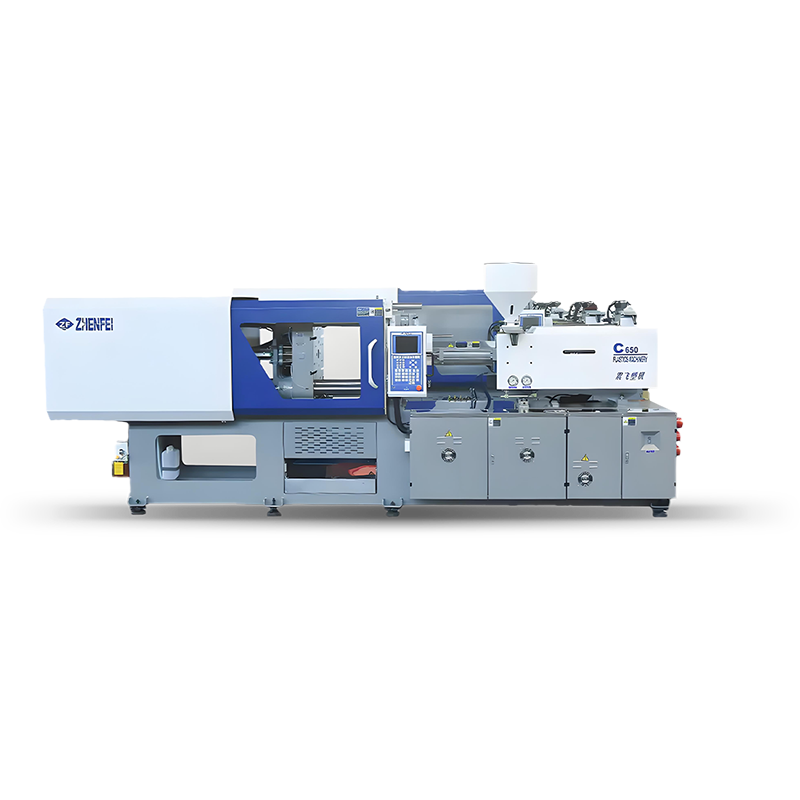
 ZF Series Servo Energy-Saving Injection Molding MachineCovers 50–2,500 tons with servo-driven closed-loop control for repeatable thin-section molding in closure and packaging applications.View Product →
Our ZF series, covering 50 to 2,500 tons of clamping force, is the platform most of our closure and packaging customers use for this kind of work, largely because the repeatability makes thin-section process windows much easier to hold.
Living hinges are one of the few features where a 3D-printed prototype can actively mislead you. A printed hinge has no molecular orientation across the fold, so it tells you how the geometry feels in your hand but says almost nothing about fatigue life. Use it to check ergonomics and clearance, then move to real resin.
For anything beyond a proof of concept, a single-cavity aluminum tool is the cheapest honest answer. It lets you run the actual grade, at the actual thickness, with the actual gate position, and put the parts on a simple bend fixture. A basic cycle tester built from a motor and a counter is enough: fold to the intended angle, count until whitening appears, then keep counting until it cracks.
When the schedule is tight, running pilot shots on a fast-cycling machine shortens the loop considerably, since you can produce a statistically useful batch of hinges in an afternoon rather than a week.
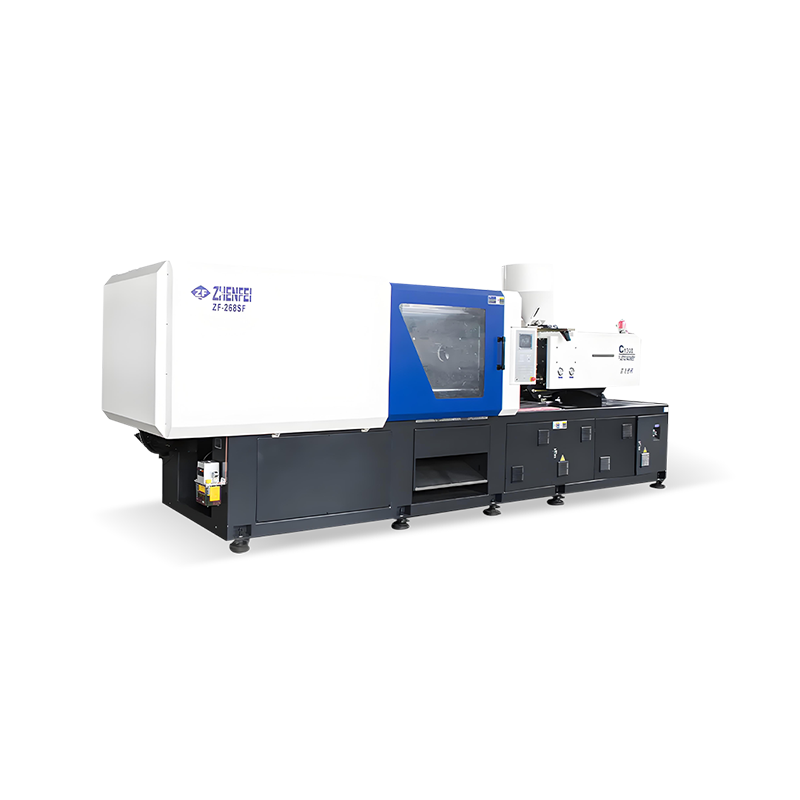
HS Series Rapid Prototyping Injection Molding Machine260–420 ton series for fast pilot batches and high-precision prototyping, with servo drive and CNC control for shorter development cycles.View Product →
The HS series rapid prototyping machine, in the 260 to 420 ton range, was built for exactly this stage: quick iterations, short cycles, and enough repeatability that the parts you test are the same parts you will later produce.
Most living hinge defects are predictable, and most of them trace back to three root causes: the gate, the temperature, or the thickness. The table below is the checklist we work through first.
| Symptom | Likely cause | What to try first |
|---|---|---|
| Whitening on the first fold | Frozen-in stress, cold mold or over-packing | Raise mold temperature, reduce hold pressure, verify transfer position |
| Crack after a few thousand cycles | Flow running along the hinge, or a sharp corner | Relocate the gate, add radii, taper the transition |
| Short shot at the web | Fill too slow, melt too cold, poor venting | Increase injection speed and melt temperature, add vents |
| Hinge feels stiff to close | Web too thick, or wrong resin grade | Reduce thickness, consider a softer copolymer or PE |
| Flash or burr at the hinge | Local over-packing, damaged parting line | Lower hold pressure, inspect and rework the shut-off |
| Part warps and the lid springs open | Uneven cooling between thick walls and thin web | Balance cooling circuits, adjust ejection, check shrink |
Temperature stability deserves a special mention because it sits behind half of that list. When mold temperature drifts a few degrees between shots, hinge quality drifts with it, and the parts that fail in the field are usually from the cold end of the drift.
Automatic Mold Temperature Control MachinePID-controlled mold temperature unit with real-time monitoring and automatic adjustment to reduce warping, shrinkage, and surface defects in molding.View Product →
That is where a dedicated mold temperature controller earns its place next to the press. Holding the tool within a tight band, rather than letting it chase the cycle, is often the difference between a hinge that folds cleanly for a hundred thousand cycles and one that whitens on the first one.
There is a quiet sustainability advantage built into the living hinge: a monomaterial part is far easier to recycle than one that mixes polypropylene with a metal pin and two different plastics. A clamshell or a folding box that is 100 percent polypropylene can go back into the same stream it came from, with no disassembly step in between.
The catch is that the hinge is also the part most sensitive to material quality. Regrind with a degraded molecular weight will still mold, but the fatigue life of the web drops quickly. If recycled content is part of your plan, test the hinge specifically rather than assuming the part as a whole will behave the same.
Almost always an unfilled thermoplastic, with polypropylene by far the most common choice. Polyethylene, nylon, TPE and TPU also appear, depending on the flexibility and temperature requirements. Rigid fillers such as glass fiber are avoided in the fold area because they act as crack starters.
For polypropylene, most production hinges fall between 0.25 mm and 0.5 mm. Thinner webs flex more easily and last longer but are harder to fill and vent. The right number depends on the fold angle, the resin grade and how many cycles the part must survive.
It varies enormously. A poorly gated hinge may crack in a few thousand cycles, while a well-designed polypropylene hinge with flow crossing the fold can exceed a million. Because the range is so wide, cycle testing your own geometry and resin is the only reliable answer.
Not really, and it should not be treated as a serviceable joint. Once the web has cracked, the material in that section is already fatigued. Design for the intended life from the start, or specify a mechanical hinge if the joint must be repairable.
No. Thermoformed polypropylene boxes are made from extruded sheet and folded along a thin line, and some prototypes are 3D printed in flexible materials. Injection molding remains the dominant route because it gives the tightest control over orientation and thickness in high volumes.
Whitening is a sign of local yielding, usually caused by a cold mold, excessive packing pressure, a web that is too thick for the required fold angle, or flow that ran along the hinge rather than across it. Start with mold temperature and hold pressure, then look at gate position.
No special hardware, but the tool needs care in three places: the thin web must be accurately machined, the transition from thick to thin should be tapered, and venting must reach the end of the hinge. Gate position should be chosen for flow direction rather than convenience.
They describe the same physical idea at different scales. A living hinge is the everyday name for a thin folding section in a plastic part; a flexure is the broader engineering term for any joint that achieves motion through elastic bending rather than a sliding or rolling contact.
If you take one thing away from all of this, let it be the sequence: choose the resin, set the thickness, then let the flow cross the hinge. Get those three right and the rest is process discipline. Get them wrong and no amount of tuning on the press will save the part.
Recommended Products

 Custom Zhenfei Electric Injection Molding Machine Manufacturers
Copyright © Ningbo Zhenfei Injection Molding Machine Manufacturing Co., Ltd. Rights Reserved.



 中文简体
 English
 Español
 中文简体