Date:Nov 16, 2026
Content
Ask five people on a molding floor where the electricity actually goes and you will usually get five different answers: the heater bands, the hydraulics, the chiller, the dryer, or simply "the machine, obviously." All of them are partly right, and that is exactly why injection molding energy consumption is so easy to misread. Electricity rarely arrives as one clean line on the production report. It shows up as a blend of thermal load, mechanical work, cooling duty, compressed air and standby draw, spread across a machine and a handful of auxiliaries that never quite switch off.
For moulders, this matters more than it once did. Electricity is one of the few cost items in a molding business that responds well to engineering attention, and the equipment already standing on your floor usually has more headroom than the people running it believe. Published process loads for injection moulding commonly sit somewhere between roughly 0.9 and 1.6 kWh per kilogram of plastic processed. That band is wide precisely because machine type, part weight, cycle time and drying practice all push the number up or down.
What follows is a practical walk through of where the energy goes, how to measure it without a metrology laboratory, which machine features genuinely move the number, and where the honest limits are. The perspective comes from a plastics machinery builder in Yuyao, Zhejiang, where most working hours are spent alongside moulders who are trying to get more good parts out of the same meter reading.
The commonly cited process-load range for injection moulding, before plant utilities are added.
Thermal, mechanical and cooling. Almost every saving you can find belongs to one of them.
Dryers, chillers and idle machines keep drawing power long after the last part drops.
Before touching a single setting, it helps to sort the plant into load groups. Not because the physics is complicated, but because savings efforts fail when they attack the wrong group. Insulating a barrel does nothing for a chiller that is already oversized, and replacing a chiller does nothing for a machine that spends forty minutes a shift sitting idle with the heaters on.
Heater bands bring resin to melt temperature and then hold it there. On machines with long dwell times or uninsulated barrels, a meaningful share of that heat simply escapes into the room, and the room then has to be cooled. It is the most visible load and often the least efficiently managed.
Injection, plastication, clamp movement, ejector stroke and core pull all consume energy through the drive. How much depends almost entirely on the drive architecture: a fixed-displacement hydraulic pump running at full speed during a holding phase wastes far more than a servo-driven system that only delivers what the cycle asks for.
Chiller compressors, circulation pumps and mould temperature controllers run as a steady background load. It grows with plant ambient temperature, with cooling circuit fouling, and with every unnecessary metre of pipe between the chiller and the mould.
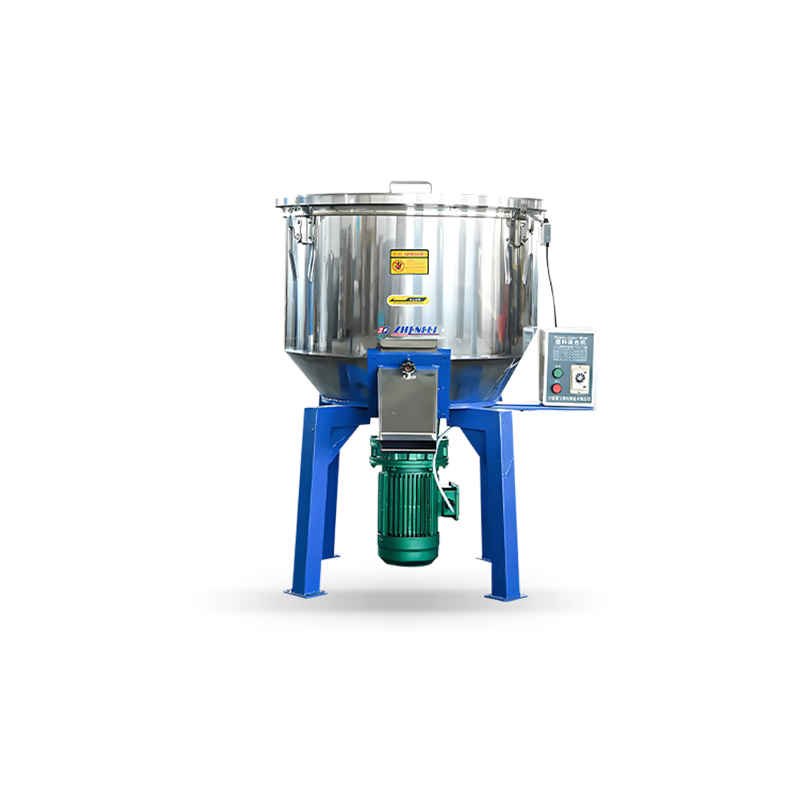
Hopper dryers, vacuum autoloaders and colour mixers are easy to overlook because they run unattended for entire shifts. A dryer set twenty degrees hotter than the resin actually needs, running through a weekend with an empty hopper, is a quiet and entirely avoidable expense.
Crushers and recycling machines consume power in direct proportion to scrap rate. This load is a symptom rather than a cause: reduce short shots, flash and start-up waste, and the granulator room becomes noticeably quieter as well as cheaper.
Robot grippers, valve actuation and blown-air ejection all feed from the compressor. Leaks, open blow-offs and machines left in a ready state between jobs make this the classic invisible cost in a molding hall.
| Load group | What it covers | How it behaves |
|---|---|---|
| Barrel heating | Heating zones, nozzle, hot runner | Constant while powered, higher with long dwell and no insulation |
| Drive and hydraulics | Injection, plastication, clamp, ejector | Peaks during injection, wastes most during holding on fixed-pump systems |
| Cooling | Chillers, pumps, mould temperature controllers | Steady, weather-sensitive, sensitive to fouling |
| Drying and handling | Hopper dryers, autoloaders, mixers | Runs unattended, often longer than the material requires |
| Scrap handling | Crushers, granulators, recycling machines | Scales directly with reject and start-up waste |
| Compressed air and standby | Leaks, blow-offs, idling machines | Continuous, largely invisible, cheapest to fix |
One observation after years of walking through molding halls: the standby column is almost always underestimated. A machine that finishes a run at 14:00 and sits warm until the next morning still holds barrel temperature, still runs its control cabinet cooling, and still holds hydraulic oil at working temperature. On a line with six such machines, that idle behaviour can outweigh the theoretical efficiency advantage of the newest machine on the floor.
The metric that matters is not kilowatts. Kilowatts tell you how fast energy is being drawn at one instant. What you can actually manage and compare is specific energy consumption, usually written as SEC: the kilowatt-hours consumed to produce one kilogram of good, saleable plastic.
SEC = Total energy consumed (kWh) / Mass of good parts produced (kg)
Measure both sides of that line over the same window. A week is usually long enough to smooth out warm-up, breaks and job changes.
The measurement does not need to be elaborate. A clamp-on power logger on the machine's main feed, plus a decent weigh count of good parts, will get you within a few percent of the truth and is far more useful than an estimate derived from nameplate ratings. Nameplate values describe what a machine can draw at peak; they say very little about what it draws on your part, on your cycle, on your shift.
Choose one small, high-cavitation part, one medium technical part and one large part. Together they cover most of the machine sizes and cycle patterns in the plant.
Include start-up, warm-up, breaks and job changes. A measurement that starts only once the process is stable will flatter the result and hide exactly the losses you are hunting.
Dryer, chiller and mould temperature controller on their own channels where possible. Splitting them makes it obvious whether a problem belongs to the machine or to the services around it.
Calculate SEC for each job, then compare the same part across machines if you have that option. The same mould on two different machines is the single most revealing test in a molding plant.
Change insulation, or a setting, or a machine, but not three things at once. Otherwise you will never know which change paid for itself.
| Metric | What it reveals | Typical use |
|---|---|---|
| SEC (kWh/kg) | Overall efficiency of the cell | Baseline and year-on-year comparison |
| Energy per part (Wh) | Cost sensitivity to cycle and cavitation | Quoting and pricing decisions |
| Idle share of shift | Time spent drawing power without producing | Shift planning and shutdown routines |
| Drying kWh per kg | Efficiency of the material preparation step | Dryer settings and insulation checks |
| Cooling kWh per kg | Load carried by chillers and pumps | Seasonal comparison, fouling detection |
If you want a shortcut into the practical side of this work, our own knowledge base collects field notes on energy-saving habits for injection moulding machines that come up again and again during commissioning visits.
Three machine characteristics dominate the electricity bill before any process setting is touched: the drive architecture, the match between clamping force and the part, and the thermal design of the barrel. They are also the hardest to change later, which is why they belong in the purchase decision rather than in the improvement list.
The pump runs at a constant speed throughout the cycle. Flow that the process does not need is diverted and returned, and the energy that went into pressurising it is lost as heat. Robust, simple, and historically cheap to buy. It is also the least efficient architecture still in wide service, particularly during long holding phases where almost no flow is required but the pump keeps turning at full speed.
A servo-driven system varies pump speed to match demand, so the machine draws close to what the cycle actually needs rather than what the pump can deliver. All-electric machines go further by removing hydraulic losses entirely and returning energy during deceleration on some axes. Both approaches deliver their biggest advantage on long, repeatable cycles with substantial cooling time.
| Drive type | How it delivers energy | Energy behaviour | Where it fits well |
|---|---|---|---|
| Fixed pump hydraulic | Constant-speed pump, valve throttling | Highest losses, especially in holding | Short cycles, low duty, older lines |
| Variable pump hydraulic | Pump displacement adjusted to demand | Moderate improvement over fixed pump | General technical moulding |
| Servo-driven hydraulic | Motor speed follows cycle demand | Strong gains on long cycles | Energy-sensitive continuous production |
| All-electric | Individual servo axes, no hydraulics | Lowest draw, cleanest control | Precision parts, medical, electronics |
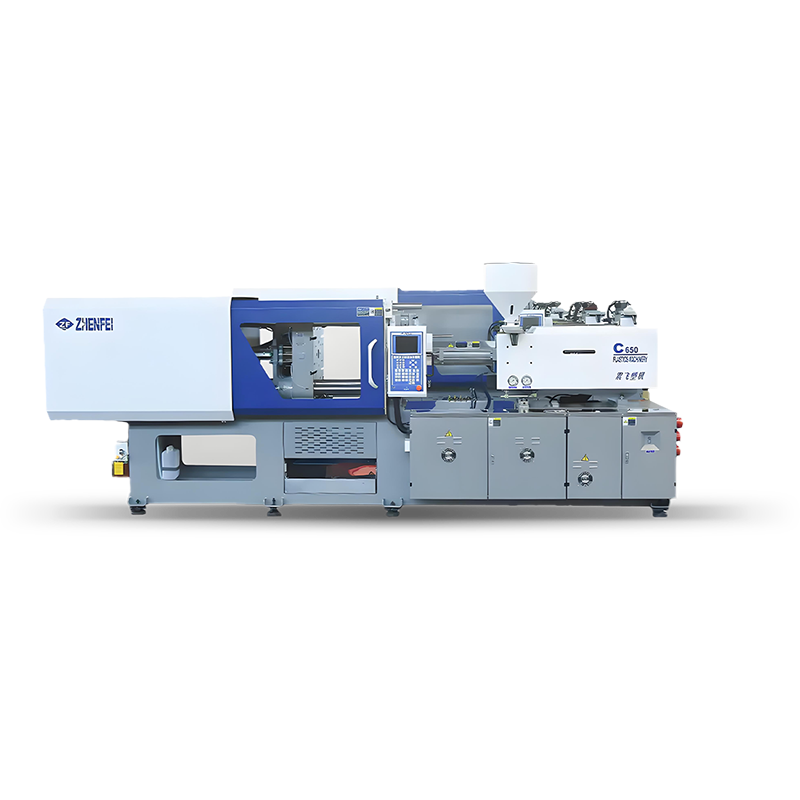
Our own answer to this question is the ZF series servo energy-saving injection moulding machine, which spans clamping forces from 50 to 2500 tonnes. That range matters more than it sounds: it means a moulder can match machine tonnage to the part instead of defaulting to whatever large machine happens to be free, and right-sizing is one of the very few energy measures that pays back immediately, with no payback period at all.
 ZF Series Servo Energy-Saving Injection Molding MachineServo-driven injection molding machine covering 50T to 2500T, allowing moulders to right-size tonnage and cut energy use in busy plants.View Product →
Running a small part on a machine two sizes too large is a familiar habit in busy plants, and it is expensive in several ways at once. The barrel is larger than needed, so residence time grows and resin sits at temperature longer than it should. The platens are larger, so more heat radiates and more cooling capacity is required. Clamp movements travel further. And the screw recovery unit is sized for shots the mould will never use. None of these individually sounds dramatic; together they routinely account for a double-digit share of a cell's energy.
Insulation jackets are unglamorous and highly effective. A bare barrel radiates heat into the room continuously, which means the heater bands work harder and the chiller or the plant air conditioning then removes the heat they released. Jackets reduce that double cost. Equally important is checking that heater bands are actually seated and functional: a partially failed band makes its neighbours work harder and hides itself inside a process that still looks acceptable.
Once the machine is settled, the remaining opportunity lives in the process itself. These are the levers a production team can pull this month, without capital approval, and they usually add up to more than people expect.
Cooling time is usually the largest slice of the cycle and the most frequently padded "just in case." Trimming a few seconds from a 28-second cycle removes a proportional share of the machine's energy per part, and the saving compounds across every part you ship. Validate with part dimensions and appearance, not with habit.
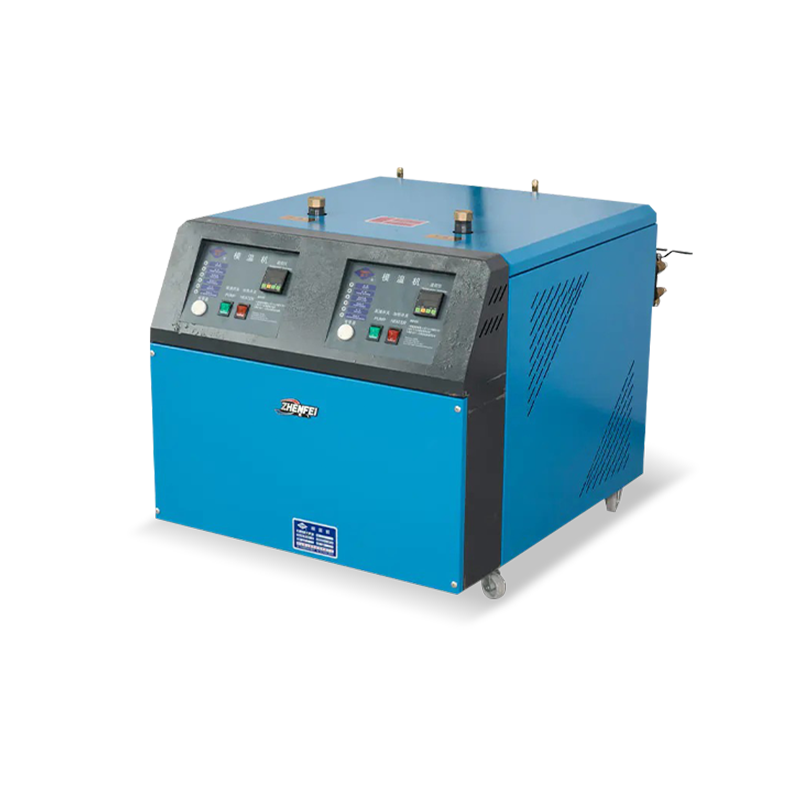
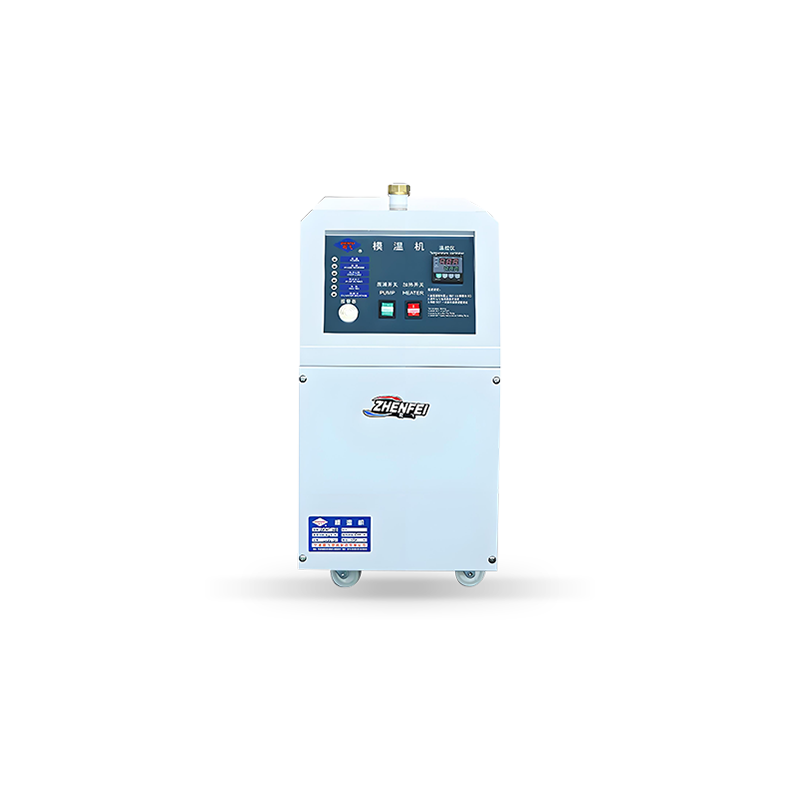
Mould temperature plays a direct role in cooling time, warpage and surface quality. An automatic mould temperature controller that holds a stable setpoint lets you run the mould hotter where flow demands it and cooler where cycle time matters, instead of chasing a moving target all shift. Unstable mould temperature almost always means extra seconds in the cycle to compensate.
Fouled circuits and warm return water are invisible in the process but very visible on the meter. Efficient cooling depends on a chiller matched to the actual load, short and insulated pipe runs, and cleaned circuits. An oversized chiller short-cycles and wastes compressor energy just as readily as an undersized one drags the process.
Dryer temperature and residence time should be set by the material supplier's data, not by tradition. Over-drying wastes energy and can degrade sensitive resins; under-drying produces silver streaks and rejects that cost far more than the drying itself. Insulated hoppers and correct airflow reduce the load further.
Every rejected part carries the full energy of its production plus the energy of crushing it. Tightening start-up procedures, mould protection settings and process monitoring reduces scrap at the source, which is the cheapest form of energy saving available to any plant.
A written shutdown routine is free. Switching off heaters and auxiliaries during long interruptions, lowering barrel temperatures during breaks, and confirming that dryers are not heating empty hoppers overnight typically delivers fast, measurable results.
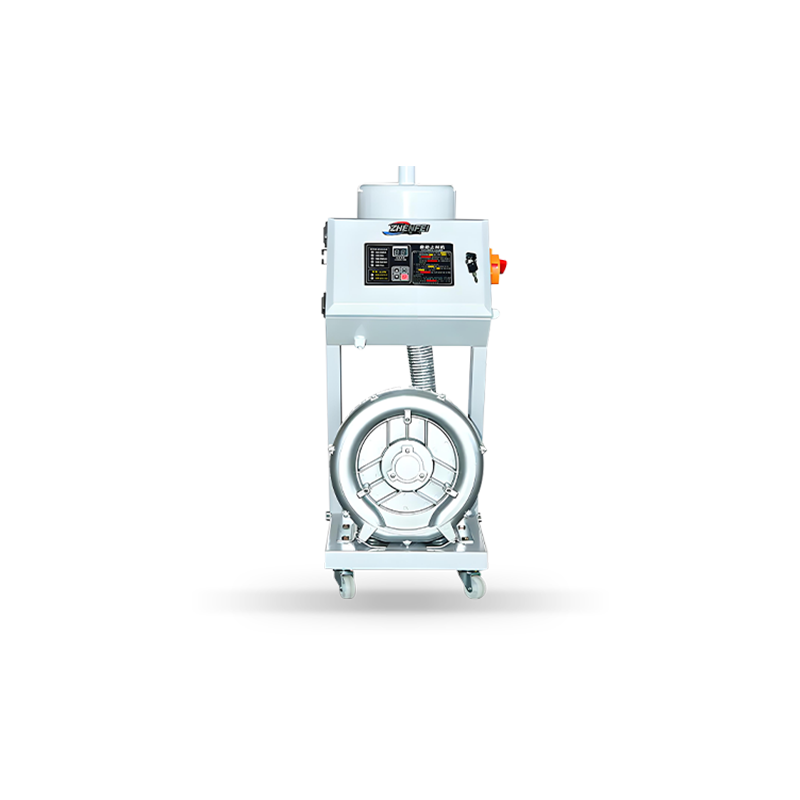
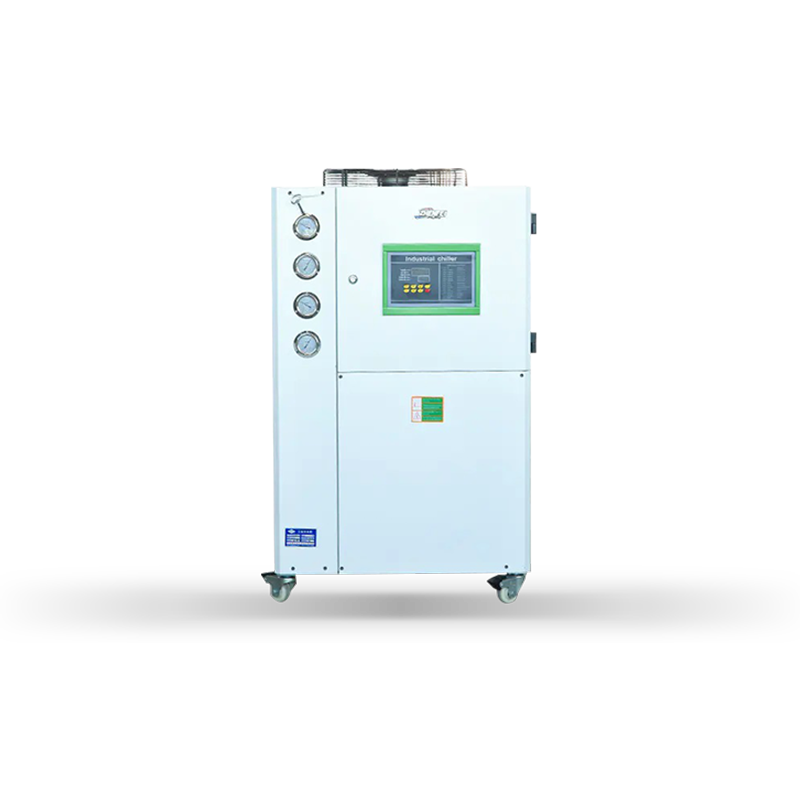
Two of these are worth equipment attention. For cooling, the practical backbone of the circuit is the industrial chiller; a unit sized to real load and maintained properly will hold the process steady and keep compressor draw predictable across the seasons. For material preparation, the SDF hopper plastic dryer handles moisture removal with controlled airflow and insulated construction, so the dryer stops being the quiet all-night consumer in the corner of the hall.
Industrial Chiller for Stable Process CoolingAuxiliary chiller designed for precise temperature control, helping injection molding and other processes maintain stable conditions and predictable energy draw.View Product → SDF Hopper Plastic Dryer for Material PreparationHopper dryer that removes moisture from plastic pellets before molding, using controlled hot air to protect part quality and reduce overnight energy waste.View Product →
There is an important principle running through this list: auxiliaries are not a side issue. Once the main machine has been optimised, the dryer, chiller, temperature controller and material handling equipment can account for a substantial share of the remaining load. They also tend to be the least monitored equipment in the building.
Energy projects fail when they are ranked by enthusiasm rather than by effort and return. Sorting them into two honest columns is usually enough to build a realistic plan.
The order matters less than the discipline of finishing one item before starting the next. In most plants the quick-win column alone produces a visible reduction in the monthly electricity figure within a single quarter, and it does so without spending money that would then take three years to return.
A one-off measurement is interesting; a baseline is useful. The difference is documentation. If the SEC of your three representative jobs is written down, with the machine, mould, cycle time and dryer settings recorded alongside it, then any change in the monthly bill can be explained rather than guessed at.
Machine model, clamping force, screw diameter, mould, cycle time, barrel temperatures, dryer settings and shift pattern. Without these, the number has no context.
Quarterly is usually enough. Seasonal temperature swings alone will move the cooling load, so compare like with like whenever possible.
If SEC falls after a change, confirm that part quality, cycle time and reject rate have not moved in the wrong direction. Saving energy by making a worse part is not a saving.
When a new machine is installed, measure it in the first month. It becomes the reference point against which future process changes are judged, which is far more reliable than comparing against the salesman's brochure.
The chart below illustrates the general shape of savings opportunities in a typical molding plant, ranked by how often they appear during a first review. It is a qualitative picture rather than a guarantee, but the pattern is remarkably consistent across shops.
The reason idle management sits at the top is simple arithmetic. It requires no capital, no new equipment and no process risk, and it addresses the hours when the plant is drawing power without producing anything at all. Drive architecture sits further down not because it is unimportant, but because it is a purchasing decision that only becomes available when a machine is due for replacement.
These are the conversations that come up during commissioning and service visits, with the answer we usually give.
"Is a servo machine worth it if our cycles are short?"
Short cycles spend less time in holding, where fixed-pump losses are worst, so the relative advantage is smaller. It is still real, but on very short, very simple cycles the payback should be calculated rather than assumed.
"Can we just lower all the barrel temperatures?"
Only within the range the material and the part will tolerate. Running cold to save energy risks short shots, poor weld lines and high internal stress. Set temperatures from the datasheet and the process window, not from the electricity bill.
"Our chiller runs all weekend. Should we switch it off?"
If no machine is producing, there is usually nothing to cool. A scheduled weekend shutdown, with proper restart procedures, is one of the simplest recurring savings available. Confirm the impact on mould sweating before making it a permanent rule.
"Do insulation jackets really matter?"
Yes, particularly on large barrels with long residence times. They reduce heater duty and reduce the heat that the chiller then has to remove. Two savings from one inexpensive component.
"Is it better to replace the machine or add auxiliaries?"
Auxiliaries first in most cases. A correctly sized and controlled dryer, chiller and temperature controller improves the performance of the machine you already own, and those units stay useful when the machine is eventually replaced.
"How quickly should we expect results?"
Operational changes show up in the next monthly meter reading. Equipment changes appear as soon as the new unit is installed and the process is re-validated. Both are worth tracking against the baseline you recorded beforehand.
Energy efficiency in plastics processing has moved from a cost project to an expectation. Customers ask about it in supplier audits, and increasingly it appears in the specification documents that accompany new tooling programmes. That shift suits moulders who have already done the measuring work, because they can answer with numbers instead of assurances.
It also suits equipment suppliers who are willing to be specific. Our own position is that efficiency claims should be demonstrable on a customer's part, on a customer's cycle, with the customer's material. That is why we publish the operating ranges of our machine lines, and why our auxiliary ranges are designed to improve the performance of existing production rather than to add complexity to it. If you would like a sense of how we approach the broader question, our green manufacturing initiative sets out the direction we are working in.
The practical summary is short. Measure specific energy consumption instead of admiring kilowatt ratings. Fix the standby hours before buying hardware. Match machine tonnage to the part. Keep the services around the machine - cooling, drying, material handling, scrap - in the same condition as the machine itself. Do those four things and injection molding energy consumption stops being an unavoidable overhead and becomes something your team can actually manage.
There is no single normal figure. Specific energy consumption varies with part weight, cycle time, machine size and drive type, and published process loads for the moulding step generally fall between roughly 0.9 and 1.6 kWh per kilogram of plastic processed. Small precision parts tend to sit higher per kilogram because a fixed machine load is spread over less material; large, heavy parts tend to sit lower. Comparing your own machine against your own baseline over time is far more informative than comparing against a generic benchmark.
Measure the kilowatt-hours consumed by the cell over a known production window, divide by the number of good parts produced in that window, and multiply by your electricity tariff. Include the dryer, chiller and temperature controller if they serve only that cell. This gives a cost per part that can be carried directly into quoting, and it makes the effect of cycle time or cavitation changes immediately visible.
On comparable cycles it usually draws less, because there are no hydraulic conversion losses and no oil cooling duty. The size of the advantage depends on the cycle profile: long cycles with substantial holding time show the biggest difference. For a given plant, the honest comparison is a measurement on your own part, since tooling, cooling and process settings contribute as much as the drive architecture.
It depends on where the waste currently sits. In many plants the largest single auxiliary saving comes from correcting dryer practice, because dryers frequently run hotter and longer than the material requires, sometimes through entire non-production periods. Efficient chiller selection and mould temperature control come next, particularly where cooling circuits are fouled or units are oversized for the actual load.
Yes, and it is usually the best place to start. Shutdown routines for heaters and auxiliaries, correct dryer settings, trimming validated cooling time, repairing air leaks and cleaning cooling circuits all require effort rather than capital. These measures also tend to reveal which problems are genuinely structural, making any later equipment decision much better informed.
Quarterly works for most moulders, with an additional review whenever a significant change is made to a machine, a mould or the material. Seasonal temperature variation alone moves the cooling load noticeably, so reviewing at the same point in each year keeps comparisons meaningful. Record the conditions each time so the numbers remain interpretable months later.

 Custom Zhenfei Electric Injection Molding Machine Manufacturers
Copyright © Ningbo Zhenfei Injection Molding Machine Manufacturing Co., Ltd. Rights Reserved.



 中文简体
 English
 Español
 中文简体