Date:Nov 02, 2026
Content
A living hinge is one of those design details that never earns a drawing of its own, yet the whole product depends on it. It is the thin flexible strip of plastic that joins two rigid halves of a part — the lid and body of a flip-top cap, the two shells of a clamshell package, a folding latch on a toolbox — so the part can bend again and again without a metal pin, a spring or a second assembly step.
We manufacture injection molding machines in Yuyao, Ningbo, and living hinges come up often when customers are developing new parts. This guide covers the geometry rules that decide whether a hinge survives, the materials that hold up to repeated flexing, and the mold details that are easy to overlook until the first batch starts cracking.
A living hinge is not a separate component. It is a region of the same plastic part, thinned to roughly a quarter to a third of the nominal wall thickness, so the material itself becomes the pivot. Because there is no pin, no spring and no second material, a hinge like this adds almost nothing to part cost, cannot rattle, and never needs lubrication.
The idea also appears outside plastics. Laser-cut plywood and acrylic use a pattern of narrow parallel cuts to make flat sheets bendable for lamps, stools and enclosures. The principle is the same — make the material thin in one direction and it will flex — but the engineering is not. A cut pattern is subtractive, and a sheet does not care about molecular orientation. A molded hinge is formed from a single melt, and everything about the way that melt flows and cools shows up later in the fatigue life of the hinge.
Most living hinge failures trace back to geometry rather than to the machine that molded the part. Four dimensions do most of the work: web thickness, hinge length, the radius where the web meets the rigid walls, and the hinge width across the part.
Thin is good, but there is a floor. Below roughly 0.2 mm, ordinary molding tolerances make the thickness hard to hold from shot to shot, and a section that thin can freeze off before the cavity fills. Above about 0.6 mm the bending strain climbs steeply and the hinge starts to feel stiff, which is usually the point where users begin to complain about the lid.
| Parameter | Typical Starting Point | Why It Matters |
|---|---|---|
| Web thickness | 0.25 to 0.50 mm | Sets bending force and strain per flex |
| Hinge length | 0.5 to 1.0 mm | Spreads strain across more material |
| Root radius | 0.15 to 0.25 mm | Removes the stress riser that starts cracks |
| Melt-flow direction | Across the hinge | Aligns polymer chains with the bending strain |
| Mold temperature for PP | 50 to 80 degrees C | Higher temperature raises crystallinity and toughness |
A sharp inside corner where the web meets a rigid wall concentrates stress in exactly the place where a crack will start. Rounding that transition to 0.15–0.25 mm is a small change in the CAD model and, in our experience, one of the most effective single fixes for a hinge that keeps failing early. The same logic applies to the outside of the bend: a generous radius there keeps material from being dragged into a sharp fold during the first closure.
Polypropylene is the default for living hinges, and the reasons are straightforward. It tolerates very high strain before it yields, it has excellent fatigue resistance, and it keeps a useful amount of flexibility at room temperature. Homopolymer grades generally give the longest flex life; random copolymers trade a little fatigue resistance for better impact behaviour and clarity. This behaviour is common to most thermoplastics, which is why the same hinge appears in lids, clips and containers across very different industries.
What to avoid matters just as much. Glass-filled and mineral-filled grades are a poor fit, because the filler particles act as crack initiators in a section that is constantly bending. Rigid amorphous plastics such as polystyrene or acrylic are unsuitable for the same reason. Thermosets cure permanently and cannot be re-flexed at all, so a phenolic or epoxy part needs a mechanical hinge instead.
Colour is worth testing rather than assuming. Some pigments, carbon black and certain titanium dioxide grades in particular, have been linked to shorter hinge life because they change how the material fails in thin sections. If a hinge has to survive a defined number of cycles, test the exact coloured compound rather than the natural resin.
The most important mold decision for a living hinge is where the gate sits relative to the hinge line. You want the melt to flow across the hinge — from one rigid half of the part into the other — so the polymer chains end up oriented in the same direction as the bending strain. Gate the part so that flow runs along the hinge instead, and the hinge can lose a large share of its fatigue life before the product has been used once.
Forming the web in steel takes precision. A knife edge or a narrow insert is common, which means tight tolerances, polishing in the direction of flow and generous venting so the thin section does not trap air. Some designs deliberately coin the hinge: while the material is still soft, the mold squeezes the web to reorient the polymer and bring it to a precise final thickness. Coining adds tooling complexity, but it buys repeatability on parts where the hinge has to hold an exact snap position.
Ejection needs the same care. A freshly molded hinge is thin and hot, so ejector pins belong on the rigid bodies rather than on the web, and cooling should be balanced so both halves of the part shrink at the same rate around the hinge.
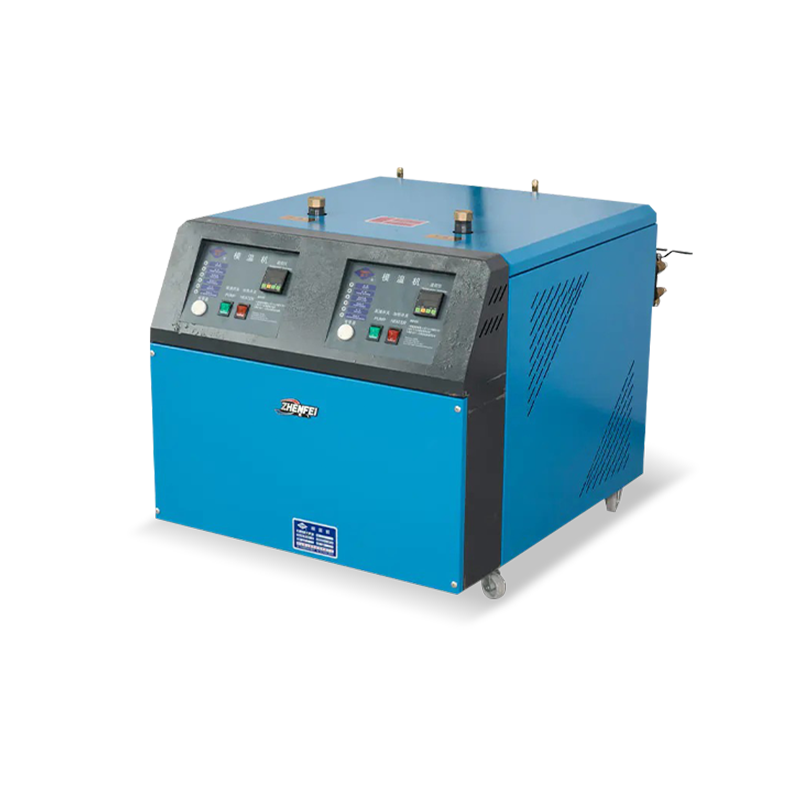
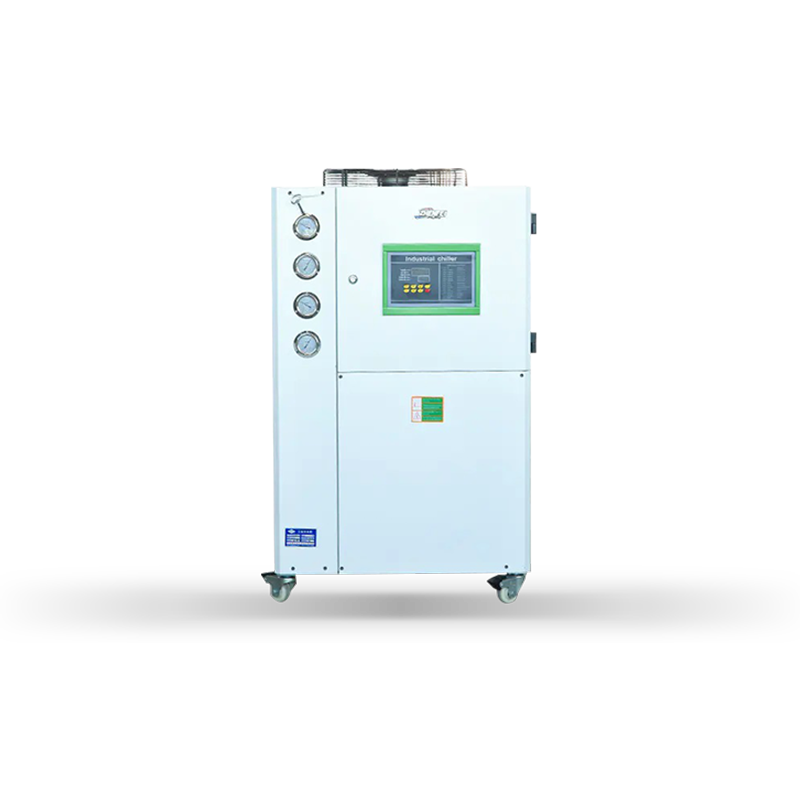
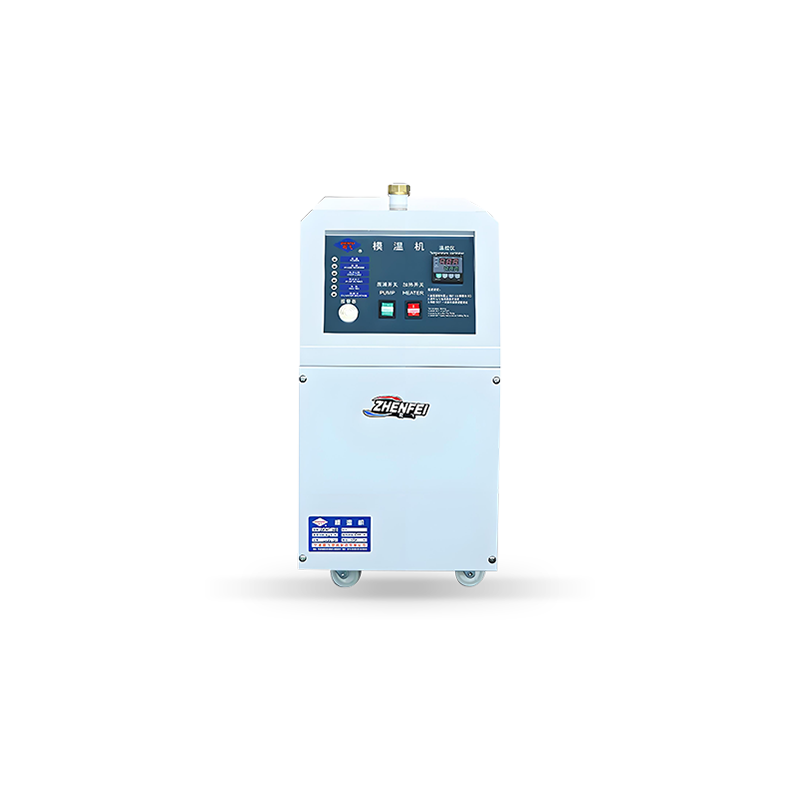
Hinge toughness is partly a crystallinity story. Polypropylene that cools against a warm, stable mold develops a more uniform crystalline structure and a hinge that survives more cycles; a cold or uneven mold can leave the web brittle and inconsistent from cavity to cavity. That is why mold temperature control belongs in the living hinge conversation and not only in the general process conversation. Holding mold temperature steady, and keeping the circulating water clean, is one of the least expensive ways to improve hinge life on a tool that already exists.
 Automatic Mould Temperature Control Machines for Injection MoldingFor living-hinge molding, these auxiliary machines hold mold temperature steady to support crystallinity, part consistency, and fewer warping, shrinkage, and surface defects.View Product →
Printed or machined prototypes have their place, but they cannot tell you how a molded hinge will behave, because they have neither molecular orientation nor a molded skin. If the hinge carries a cycle-life target, build a real tool early and mold real parts.
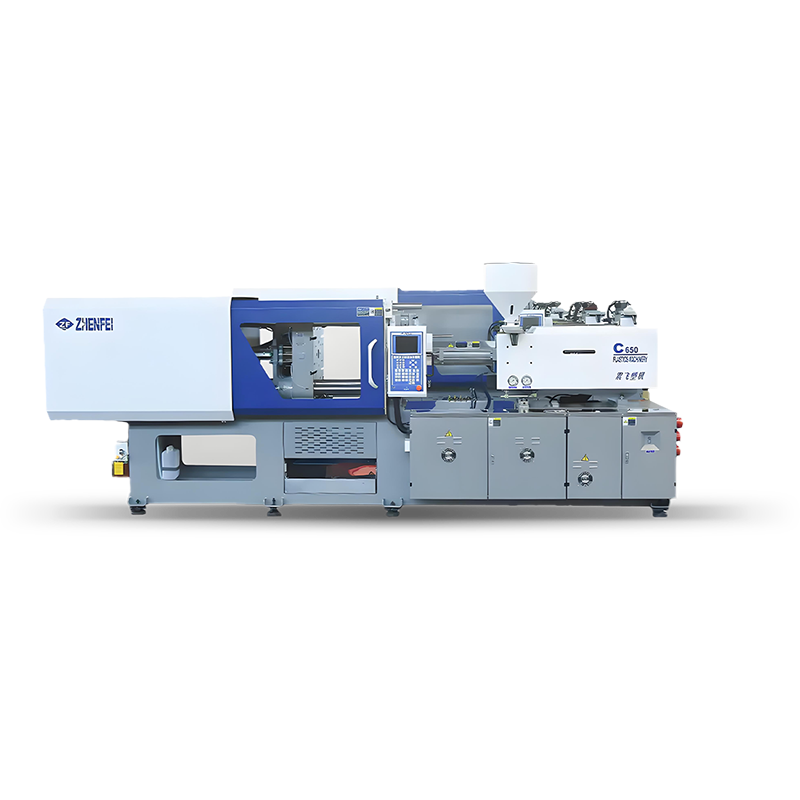
For that first round of samples, a fast machine pays for itself in schedule alone. Our HS series rapid prototyping machine covers 260 t to 420 t with short cycle times, which suits the small, often multi-cavity tools used for closures, lids and small housings where living hinges appear. Sample, flex, measure, adjust the tool, repeat — the loop stays short and mistakes stay cheap.
HS Series Rapid Prototyping Injection Molding Machine 260T-420TRapid prototyping injection molding machine for short sample loops and repeatable production, suited to small multi-cavity tools, packaging, and healthcare applications.View Product →Once the design is locked, production is mostly about repeatability. A hinge that works on the first shot and cracks on the ten-thousandth usually means the process drifted: a few degrees of barrel temperature, a slightly different hold pressure, a cooling change made after a mold repair.
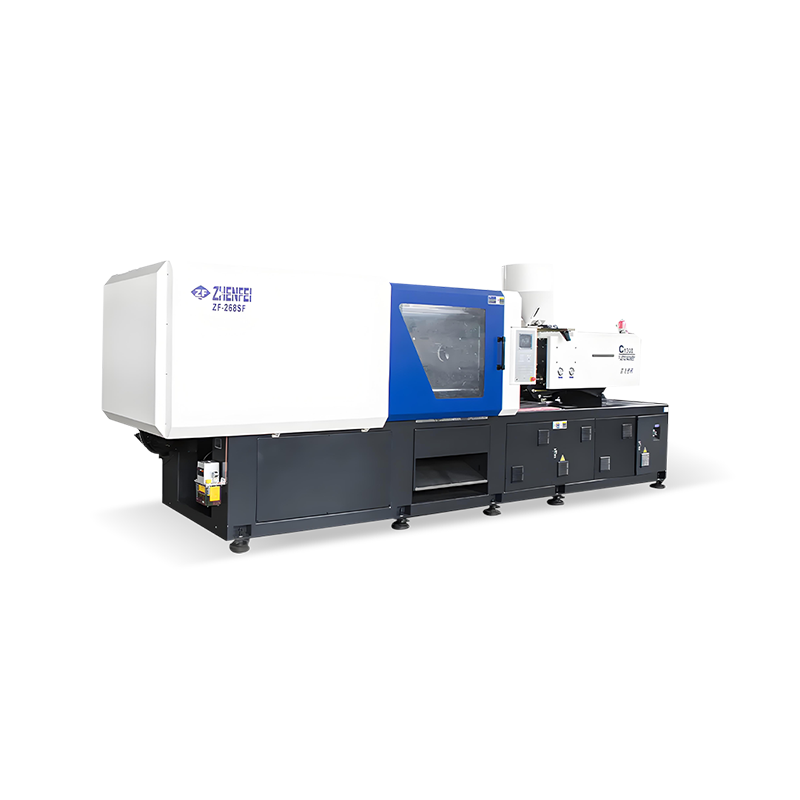
Our ZF series servo energy-saving injection molding machines span 50 t to 2500 t, covering everything from small multi-cavity closures to large folding crates and containers. The shot-to-shot consistency that servo control brings matters a great deal when the most critical feature in the part is a 0.3 mm web.
ZF Series Servo Energy-Saving Injection Molding Machine 50T-2500TServo-driven injection molding machine for repeatable shot-to-shot control, helpful for thin living-hinge webs in closures, crates, and containers.View Product →Living hinge design rewards patience more than cleverness. None of the rules above are exotic — thickness, radius, flow direction, material, temperature — but they all interact, and a hinge is a place where a small process variation gets amplified over hundreds of thousands of flexes. Work through them in order, test molded parts early, and the hinge will quietly do its job for the life of the product.
If you are developing a part with a living hinge and want to talk through machine selection, cycle times or temperature control, we are glad to help.
Recommended Products

 Custom Zhenfei Electric Injection Molding Machine Manufacturers
Copyright © Ningbo Zhenfei Injection Molding Machine Manufacturing Co., Ltd. Rights Reserved.



 中文简体
 English
 Español
 中文简体