Date:Feb 09, 2026
Content
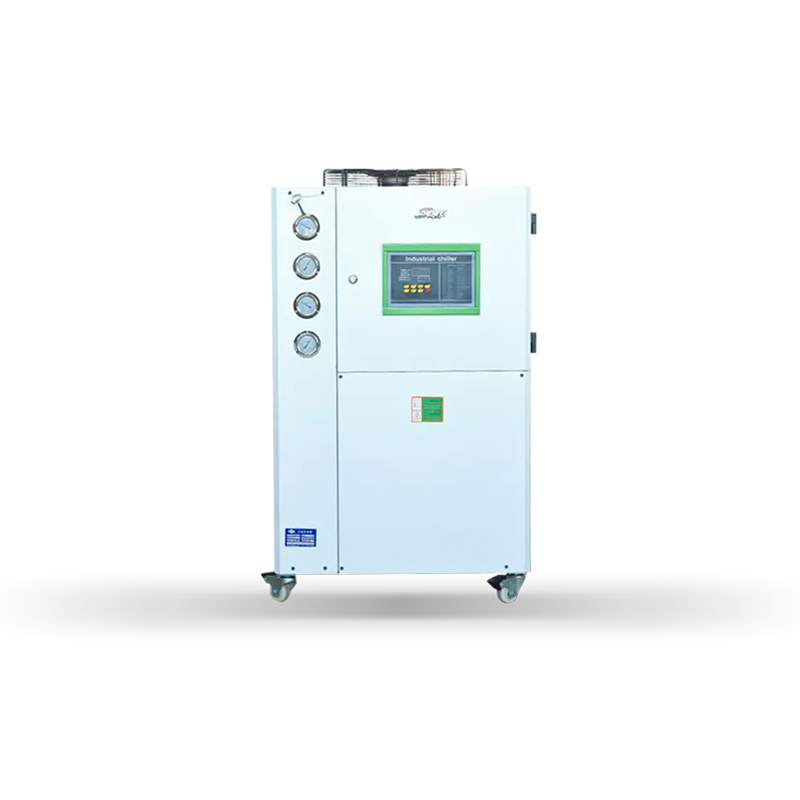
In the world of manufacturing, an Industrial Chiller is the heartbeat of the production line. Whether it is cooling a high-speed laser cutter, regulating the temperature of a plastic injection mold, or maintaining a food processing environment, a sudden drop in cooling performance is more than an inconvenience—it is a threat to your bottom line.
When your chiller fails to reach its setpoint, the pressure is on to find a solution before the equipment overheats.
The condenser is responsible for dissipating the heat removed from your process into the surrounding environment.
Refrigerant is the “blood” of the Industrial Chiller. Without the correct volume and pressure, the heat transfer cycle breaks down.
Even if the refrigeration circuit is perfect, the chiller cannot cool if the process fluid (water or glycol) isn’t moving through the heat exchanger fast enough.
Use this table to quickly diagnose the potential culprit based on your chiller’s readings.
| Symptom | Potential Cause | Immediate Action |
|---|---|---|
| High Discharge Pressure | Dirty Condenser / High Ambient Temp | Clean fins; Improve ventilation |
| Low Suction Pressure | Low Refrigerant / Clogged Filter Drier | Leak test; Replace filter drier |
| Low Flow Alarm | Clogged Strainer / Pump Failure | Clean Y-strainer; Check pump motor |
| Evaporator Icing | Poor Heat Exchange / Low Refrigerant | Check fluid flow; Check charge |
| Compressor Not Starting | Electrical Issue / Safety Tripped | Reset high-pressure switch; Check fuses |
Every Industrial Chiller has an ambient operating limit. If your facility reaches over 40°C (104°F) during a summer heatwave, an air-cooled chiller may struggle to reject heat.
Sometimes the hardware is fine, but the “brain” is confused.
Preventive maintenance is the best cure. A cooling failure is often the result of small issues that were ignored.
Avoid using tap water. Tap water contains minerals that cause scale buildup in the heat exchanger. Always use distilled or deionized water mixed with a high-quality inhibited glycol.
By identifying these common causes early, you can avoid expensive emergency repairs and keep your production facility running smoothly. An efficiently running Industrial Chiller not only ensures product quality but also significantly reduces your energy costs.
Q1: Why does my chiller keep tripping the high-pressure switch? A: This usually means the heat cannot leave the system. Check for a dirty condenser, a failed condenser fan, or (in water-cooled units) a lack of cooling tower water flow.
Q2: How do I know if my compressor is failing? A: Excessive noise, high vibration, or an “Open Internal Overload” error are signs. If the compressor is drawing significantly more amps than its nameplate rating, it may be nearing the end of its life.
Recommended Products

 Custom Zhenfei Electric Injection Molding Machine Manufacturers
Copyright © Ningbo Zhenfei Injection Molding Machine Manufacturing Co., Ltd. Rights Reserved.
Custom Zhenfei Electric Injection Molding Machine Manufacturers
Copyright © Ningbo Zhenfei Injection Molding Machine Manufacturing Co., Ltd. Rights Reserved.



 中文简体
中文简体 English
 Español
 中文简体
中文简体