Date:Jan 26, 2026
Content
With the rapid development of Industry 4.0 and smart factories, manufacturers are under increasing pressure to improve efficiency, reduce labor dependency, and achieve stable, data-driven production processes. In this context, HAL Vacuum Autoloaders have become a critical component in automated material handling systems, especially in plastic processing and manufacturing environments.
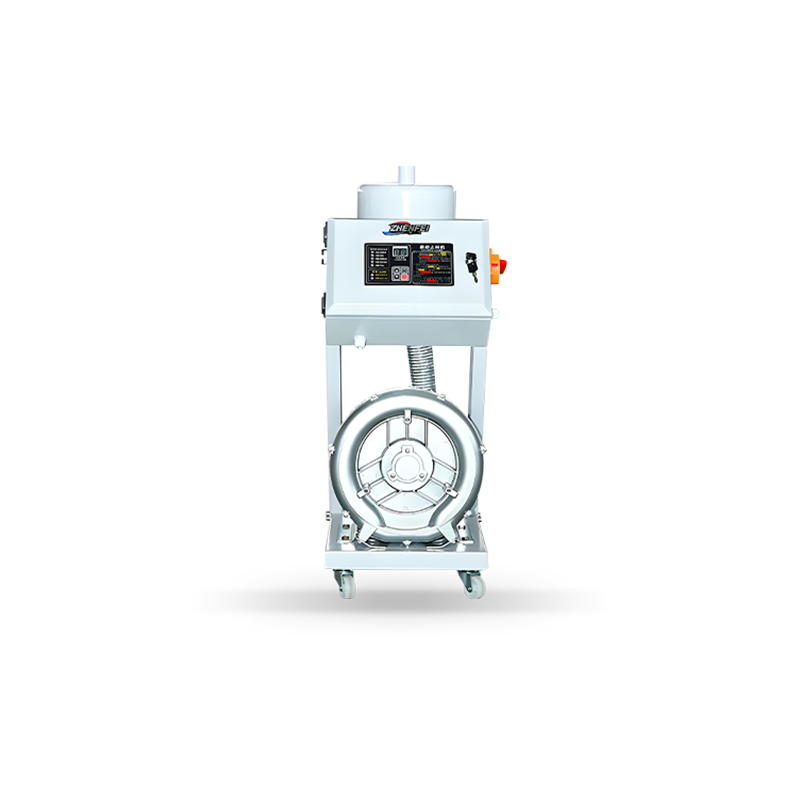
A HAL Vacuum Autoloader is designed to automatically convey raw materials—such as plastic granules or powders—from storage containers to processing machines using vacuum suction. This eliminates the need for manual feeding and ensures a continuous, controlled material supply.
In automated production lines, material handling is often a bottleneck. Manual loading introduces inconsistencies, delays, and contamination risks. By integrating a HAL Vacuum Autoloader into the system, manufacturers can achieve:
This automated feeding capability forms the foundation of a smart manufacturing environment, where machines operate continuously with minimal manual oversight.
Smart manufacturing relies heavily on system connectivity and process coordination. HAL Vacuum Autoloaders are designed to work seamlessly with injection molding machines, extruders, and centralized control systems.
Modern HAL models can be integrated with:
Through these integrations, the autoloader becomes part of a networked production ecosystem, allowing real-time status monitoring and automated responses to material shortages or system anomalies.
This level of integration supports key smart factory principles such as predictive maintenance, process transparency, and data-driven decision-making.
Automation is ultimately about efficiency, and HAL Vacuum Autoloaders contribute in several measurable ways:
| Efficiency Aspect | Contribution of HAL Vacuum Autoloader |
|---|---|
| Material Supply | Continuous, stable feeding without manual delays |
| Labor Utilization | Reduces dependency on operators for material loading |
| Machine Runtime | Minimizes stoppages caused by material shortages |
| Product Quality | Ensures consistent material flow, reducing defects |
| Production Speed | Supports high-speed, uninterrupted manufacturing |
By maintaining a stable material supply, production machines can operate at optimal capacity, which is essential for high-volume or precision manufacturing environments.
Human involvement in material handling often leads to issues such as incorrect material loading, inconsistent quantities, or delayed refilling. A HAL Vacuum Autoloader significantly reduces these risks by standardizing the feeding process.
Key advantages include:
By minimizing manual intervention, manufacturers can achieve higher process reliability and better overall product consistency—both critical elements of smart manufacturing.
Industry 4.0 emphasizes automation, connectivity, and efficiency. A HAL Vacuum Autoloader aligns with these goals by acting as an intelligent material handling unit within the production line.
Its contribution includes:
As manufacturers move toward more intelligent and flexible production systems, vacuum autoloaders become a key enabler rather than just auxiliary equipment.
Q1: Is a HAL Vacuum Autoloader suitable for fully automated production lines?
Yes. HAL Vacuum Autoloaders are specifically designed to integrate with automated and semi-automated systems, making them suitable for smart factories.
Q2: Can a HAL Vacuum Autoloader be connected to centralized control systems?
Most modern HAL autoloaders support PLC or controller-based integration, allowing centralized monitoring and control.
Q3: Does automation with a HAL Vacuum Autoloader reduce production costs?
Yes. Reduced labor requirements, fewer machine stoppages, and improved material efficiency all contribute to lower operating costs.
Q4: Is a HAL Vacuum Autoloader flexible for future automation upgrades?
Absolutely. Its modular design makes it easy to adapt to expanding production lines or more advanced smart manufacturing systems.

 Custom Zhenfei Electric Injection Molding Machine Manufacturers
Copyright © Ningbo Zhenfei Injection Molding Machine Manufacturing Co., Ltd. Rights Reserved.
Custom Zhenfei Electric Injection Molding Machine Manufacturers
Copyright © Ningbo Zhenfei Injection Molding Machine Manufacturing Co., Ltd. Rights Reserved.



 中文简体
中文简体 English
 Español
 中文简体
中文简体