Date:Oct 12, 2026
Content
Ask any production manager who has run both technologies, and the conclusion comes quickly: hydraulic plastic moulding machines are still the default choice for high-tonnage injection moulding. Electric machines win the energy comparison at low tonnage, but when a part needs 300 tonnes of clamping force or more, a well-built hydraulic machine delivers more force per unit of investment, accepts a wider range of screws, and tolerates tougher shop-floor conditions. The pragmatic decision is not whether to buy a hydraulic machine, but how to match its specifications, energy system and auxiliary equipment to the specific parts you plan to produce.
Every plastic moulding machine repeats the same cycle: close the mould, inject the melt, hold the packing pressure, cool the part, open the mould, eject the part. What distinguishes a hydraulic machine is how that movement is generated. An electric motor drives a pump, the pump delivers oil to cylinders and hydraulic motors, and directional and proportional valves control the speed and force of each movement. The resulting oil pressure supplies the clamping force that keeps the mould closed while hot plastic is forced into the cavity.
This architecture offers three practical advantages. First, clamping force scales easily from about 50 tonnes to 2500 tonnes by increasing cylinder diameter and pump capacity. Second, a hydraulic system produces maximum force at low speed, which is exactly what the packing and holding phase requires. Third, the same hydraulic circuit can run core pulls, ejectors and unscrewing devices without adding dedicated servo motors.
The drawback is efficiency. A conventional fixed-pump machine keeps the motor running at constant speed, sending excess oil through a relief valve during the cooling and idle phases. That wasted energy becomes heat and adds to every cycle. This is why hydraulic system control has become a central topic in production engineering, and why servo-driven pumps now dominate new machine sales.
When you compare quotes, four numbers determine whether a machine can physically make your parts: clamping force, tie-bar spacing, shot capacity and injection pressure. A fifth factor, energy consumption, decides whether the machine makes economic sense in continuous production.
| Specification | What it controls | Selection rule of thumb |
|---|---|---|
| Clamping force | Maximum part area before flash appears | Projected area × cavity pressure × safety factor (1.1–1.3) |
| Tie-bar spacing | Maximum mould footprint | Mould base + 50–100 mm clearance |
| Shot capacity | Maximum part weight per cycle | Part weight should be 30–80% of rated shot |
| Injection pressure | Ability to fill thin-wall sections | Higher pressure for engineering and high-flow resins |
| Daylight / opening stroke | Part ejection depth | Must exceed part height by at least 1.5× |
Evaluate these figures as a system, not in isolation. A 250-tonne machine with an oversized injection unit will still struggle with a thin-wall part if the injection pressure is too low. A machine with generous tie-bar spacing but limited daylight will restrict mould height. Define the mould base, part geometry and material range first, then convert those constraints into a specification sheet.
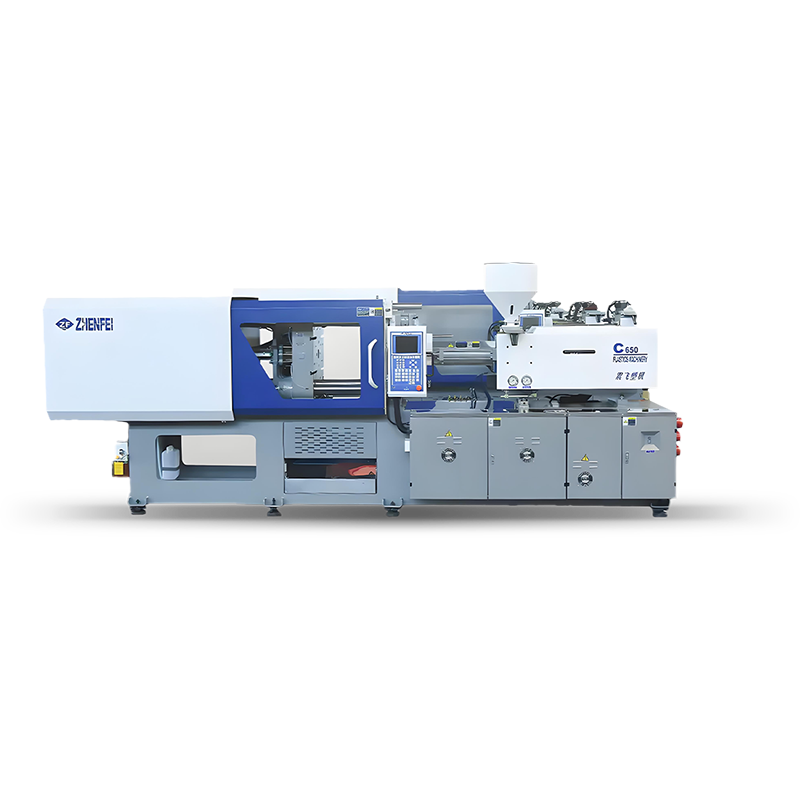
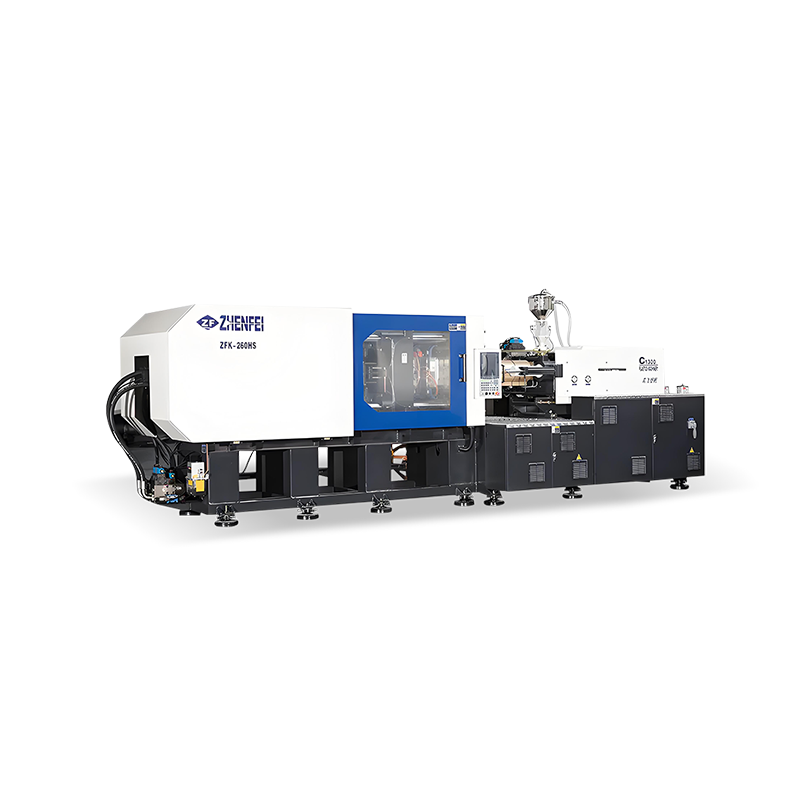
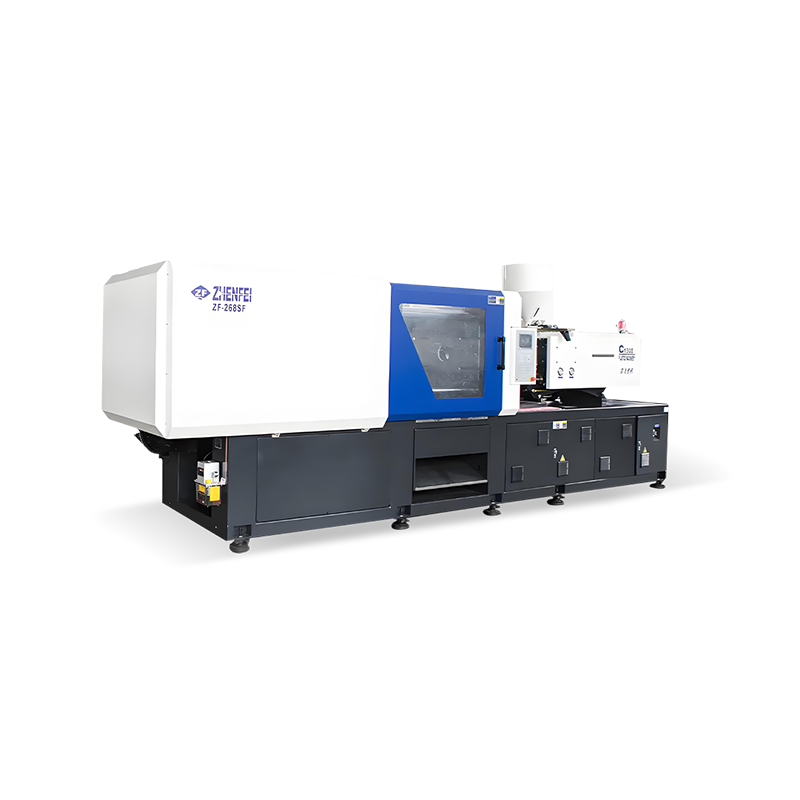
Suppliers usually cover this range with several platforms rather than one universal frame. The injection molding machine series at Zhenfei, for example, splits into a general-purpose servo range (ZF Series), a high-speed range for thin-wall packaging (HS Series), and a thermoset range for phenolic and Bakelite materials (JM Series). Identifying which platform your parts fall into narrows the choice before you compare individual tonnages.
Undersized clamping force produces flash; oversized clamping wastes energy and stresses the mould. A practical method is to multiply the projected part area by the expected cavity pressure and then apply a safety factor. For commodity plastics, cavity pressure often sits between 300 and 500 bar; for engineering resins such as glass-filled nylon, it can reach 700 to 800 bar.
Here is a worked example. A part with a projected area of 250 cm² moulded in ABS at 400 bar cavity pressure needs about 100 tonnes of clamp force. Adding a 20 percent safety factor brings the recommendation to 120 tonnes, so a 130-to-150-tonne machine is the rational choice. The same part in a thin-wall glass-filled nylon at 700 bar would require roughly 210 tonnes.
Shot weight follows the same logic. If the part plus runner weighs 180 g, choose a machine rated for 250 to 500 g shot capacity. Machines that run beyond 80 percent of rated shot weight tend to show inconsistent plasticising and prolonged holding times.
In a servo-driven hydraulic plastic moulding machine, each pump is paired with a servo motor whose speed follows the instantaneous flow and pressure demand of the process. During cooling, the motor slows to near zero; during injection, it ramps up in milliseconds. Compared with a fixed-speed pump, a servo machine typically cuts energy use by 30 to 50 percent over a complete cycle, and by up to 70 percent on cycles with long packing or cooling phases.
Servo systems also run cooler. The hydraulic oil stays at a more stable temperature, so seals last longer and the oil cooler carries a lighter load. For the buyer, the practical result is a payback of one to three years in a two-shift operation, with the gap narrowing as electricity tariffs rise.
The ZF Series servo energy-saving injection molding machine from Zhenfei shows how far this technology has scaled. Covering clamping forces from 50 to 2500 tonnes, the series delivers the same peak pressure and injection speed as a conventional hydraulic machine while consuming only the energy the process actually needs.
 ZF Series Servo Energy-Saving Injection Molding Machine (50-2500T)This servo-driven hydraulic machine offers clamping forces from 50 to 2500 tonnes, delivering hydraulic-level performance while consuming only the energy required by each process, making it a practical choice for energy-conscious production.View Product →
Hydraulic machines need more attention than all-electric machines, but the difference is manageable. The main cost items are oil, filters, seals and valves. A disciplined maintenance routine keeps total upkeep between one and three percent of the purchase price per year.
Start with the oil. Sample it every six months in continuous production. If particle contamination rises above ISO 4406 class 18/16/13, filters are failing or wear debris is circulating in the pumps. An oil sampling kit and a logbook are inexpensive compared with replacing a worn piston pump.
Next, check seals and hoses. On machines running more than 6000 hours per year, inspect cylinder seals at least annually and pressure-test or replace flexible hoses preventively at five-year intervals. A leaking hose at 250 bar is not only a housekeeping problem; it is an atomised fire hazard.
Finally, watch the oil temperature. A reservoir running above 55 °C means wasted energy or declining cooling capacity, and it will consume seals faster than a system kept at 40 to 50 °C.
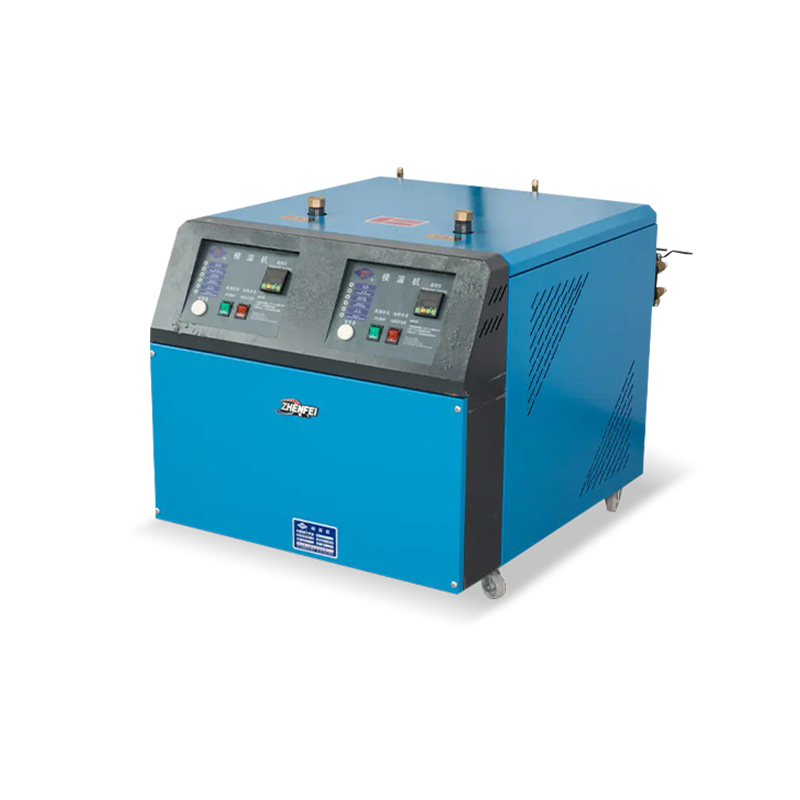
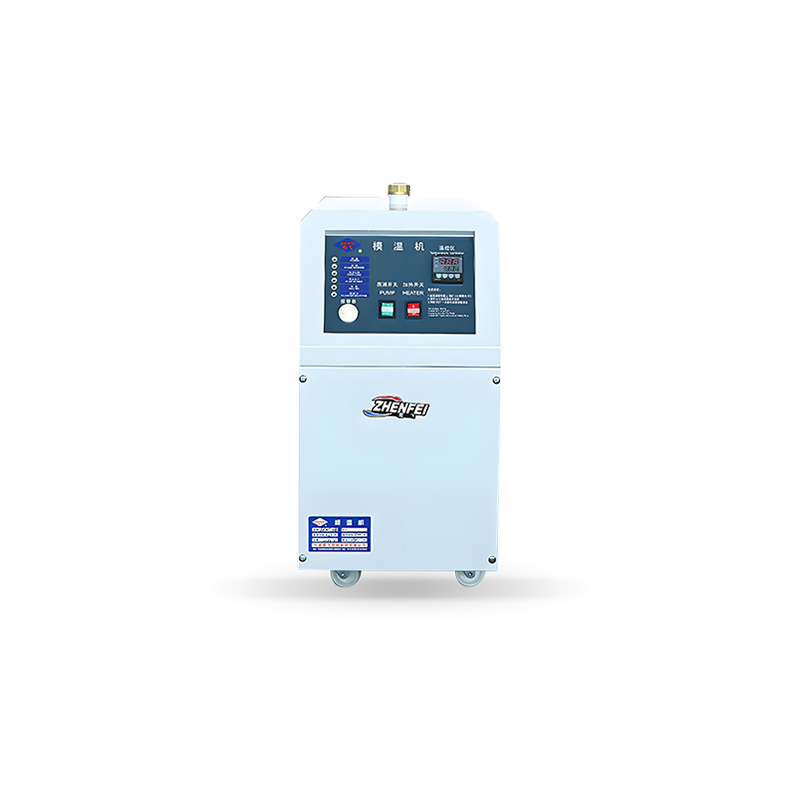
The mould temperature controller is the most undervalued component in a moulding cell. Holding the mould surface at the correct set point shortens the cooling phase, reduces residual stress and stabilises part dimensions. Many processors find that upgrading from open-loop water cooling to a closed-loop automatic mould temperature control machine produces a five to ten percent reduction in cycle time on the same mould.
Automatic Mold Temperature Control MachineA closed-loop mold temperature controller that maintains the mold surface at a precise set point, helping to shorten cooling cycles and reduce defects like warping or shrinkage for consistent part quality.View Product →A hydraulic plastic moulding machine converts part of its electrical input into heat, and that heat must be removed to keep oil viscosity stable. An industrial chiller is the standard answer in warm climates and high-cavity production, where cooling towers or tap water cannot keep up during summer months. When hydraulic oil temperature drifts by more than a few degrees across a shift, shot weight and cycle time drift with it, and troubleshooting replaces production.
Industrial Chiller for Stable Hydraulic Oil TemperatureAn industrial chiller removes excess heat from hydraulic systems, keeping oil viscosity stable so shot weight and cycle time remain consistent, especially in warm climates or high-cavity production.View Product →Choose a hydraulic plastic moulding machine when your parts demand high clamping force, deep draw, insert moulding, or multiple auxiliary actions. Choose a servo-driven hydraulic machine when continuous production makes energy cost a decisive factor. And evaluate mould temperature control, chilling, drying and conveying as part of the machine specification, because those elements determine real cycle time and rejection rate more than the brochure numbers do.
Recommended Products

 Custom Zhenfei Electric Injection Molding Machine Manufacturers
Copyright © Ningbo Zhenfei Injection Molding Machine Manufacturing Co., Ltd. Rights Reserved.
Custom Zhenfei Electric Injection Molding Machine Manufacturers
Copyright © Ningbo Zhenfei Injection Molding Machine Manufacturing Co., Ltd. Rights Reserved.



 中文简体
中文简体 English
 Español
 中文简体
中文简体