Date:Feb 16, 2026
Content
In 2026, purchasing an Injection Molding Machine (IMM) is no longer just about comparing tonnage and price; it is a strategic decision involving AI integration, energy efficiency, and material adaptability. As global supply chains increase their demands for Green Manufacturing, the first step must begin with a meticulous analysis of your “Product DNA.”
The modern manufacturing environment requires machines that can handle more than just standard polymers. Identifying your specific needs is the foundation of a high-ROI investment.
The 2026 market is accelerating toward a circular economy. Can your injection molding machine stably process Bio-based Plastics or high percentages of Post-Consumer Recycled (PCR) resins? These materials often have narrower processing windows than virgin resins. When selecting a machine, you must evaluate the wear and corrosion resistance of the Screw and Barrel. An ideal solution is to choose a model where the required shot weight falls between 20% and 80% of the machine’s maximum capacity. This ensures melt homogeneity and prevents material degradation due to excessive residence time.
If your business involves 5G connectors, precision medical devices, or micro-optical components, the stability of Precision Injection Molding will directly dictate your profit margins. High-end manufacturing in 2026 requires not only extreme positional accuracy but also systems that can adjust parameters in real-time to compensate for fluctuations in ambient humidity. This “Adaptive Production” capability has become a key indicator of whether a machine is “future-proof” and is one of the most searched features under “High-precision IMM” on Semrush.
The “Tonnage” of an injection molding machine is its core identity, but 2026 engineers no longer rely on guesswork. They use digital twins and precise calculations to determine the required Clamping Force. Incorrect clamping force leads to “flash” (excess plastic) or permanent damage to expensive molds.
During selection, the projected area of the part and the average pressure inside the mold cavity must be considered. The standard calculation logic is as follows:
Where ** represents the clamping force (Tons); is the cavity pressure (typically 2 to 8 tons per square inch, depending on wall thickness); is the total projected area of the part and runner system; and ** is the safety factor (usually 1.2). For the Thin-Wall Injection Molding popular in 2026, the required clamping force is often much higher than the physical size of the part might suggest due to surging filling pressures.
As mold designs become more complex—featuring multiple cavities or core-pulling mechanisms—mold dimensions often exceed the machine’s rated platen area. Consequently, Tie-Bar Spacing becomes critical. To address this, many leading factories in 2026 prefer Tie-Bar-Less Injection Molding Machines. This design not only allows for larger molds but also provides ample space for automated robots to access parts from the side, significantly optimizing Floor Space Utilization.
The “heart” of the injection molding machine determines production efficiency and carbon footprint. Under strict 2026 global energy regulations (such as ISO 50001), the choice of drive technology is vital for ESG Compliance.
All-Electric Injection Molding Machines (All-Electric IMM) rely on independent servo motors for clamping, injection, and plasticizing. They are the “Gold Standard” for the medical and electronics industries because they are quiet, oil-free, and offer positional accuracy at the millisecond level. Regarding energy consumption, all-electric models can save 50% to 70% in electricity compared to traditional hydraulic machines, drastically reducing the energy cost per part.
For large parts like automotive bumpers or heavy-duty industrial crates that require massive clamping forces and long holding times, Hybrid or Servo-Hydraulic Machines remain the top choice. Hybrid machines combine hydraulic power with the energy-saving characteristics of electric motors. Through servo-pump systems, the machine only consumes energy during movement, with extremely low standby power. In 2026, Hybrid IMMs have become the most cost-effective choice for general manufacturing, balancing initial investment (CAPEX) with long-term operating expenses (OPEX).
| Metric | All-Electric IMM | Hybrid IMM | Servo-Hydraulic IMM |
|---|---|---|---|
| Best Applications | Medical, Electronics, Thin-wall | Automotive, Appliances | Large Industrial Parts |
| Energy Efficiency | Extreme (Saving > 60%) | High (Saving 30-50%) | Good |
| Repeatability | Extreme (< 0.01mm) | Excellent | Good |
| Maintenance Cost | Low (No Oil Changes) | Moderate | Higher (Hydraulic Care) |
| Cleanliness | Cleanroom Certified | Standard | General |
| Initial Investment | Higher | Moderate | Most Competitive |
In 2026, if an injection molding machine cannot connect to the cloud, it is obsolete the moment it is installed. Smart Manufacturing is no longer optional; it is a core competency.
Modern IMMs must support the OPC-UA Communication Protocol. This allows the equipment to interface seamlessly with Manufacturing Execution Systems (MES), uploading real-time data on cycle times, scrap rates, and energy usage. Through edge computing, machines can identify parameter drifts (such as oil temperature or melt pressure fluctuations) locally and issue warnings before defects occur. On Semrush, “Real-time IMM monitoring software” is one of the fastest-growing technical search terms of 2026.
The 2026 IMM is evolving from an “executor” into a “thinker.” Using AI Algorithms, the machine can automatically fine-tune injection pressure based on minute viscosity differences between material batches. This self-optimization significantly reduces Setup Time, allowing even less-experienced operators to produce high-quality parts. For SMEs pursuing Flexible Manufacturing, such intelligent systems are key to shortening Lead Times.
Q1: How do I evaluate the Energy ROI of an IMM in 2026?
You can refer to the EUROMAP 60 standard for energy measurement. Typically, while an all-electric machine costs 20% more initially, the ROI is usually achieved within 18 to 24 months through lower electricity bills and reduced maintenance costs (no hydraulic oil/filter changes).
Q2: Can my old molds be installed on a new smart injection molding machine?
Yes, as long as the platen dimensions and ejection strokes match. However, to fully leverage the smart features of 2026 machines, we recommend adding pressure and temperature sensors to the molds to support the machine’s closed-loop control system.
Q3: How do I handle stability issues when processing recycled materials?
Choose an IMM equipped with an AI Adaptive Control System. This system monitors melt flow resistance and automatically compensates for the inconsistent viscosity of recycled batches. Additionally, ensure the machine is fitted with a wear-resistant screw to handle potential impurities in recycled materials.
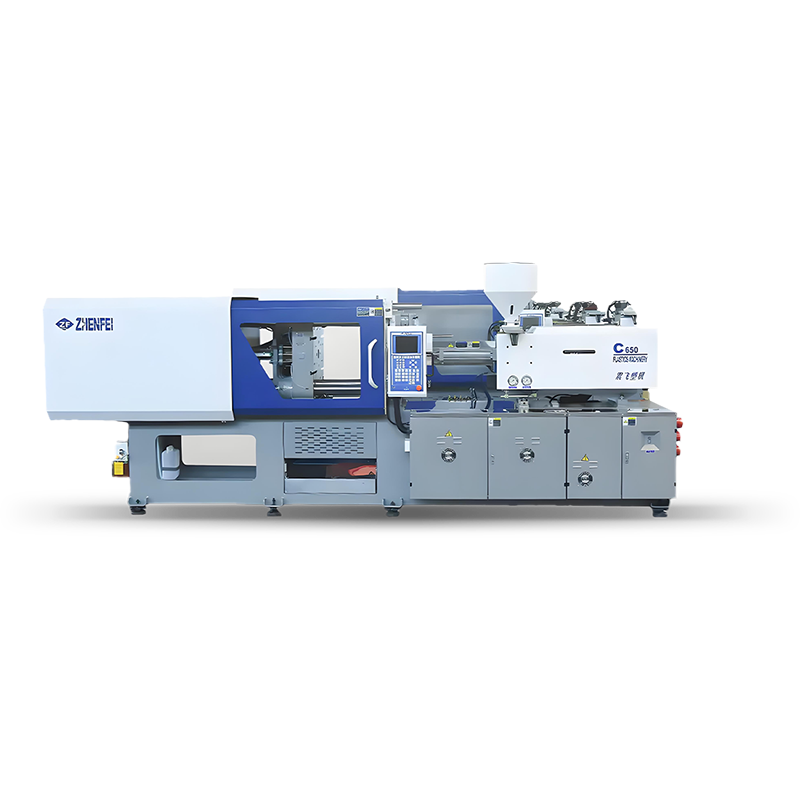
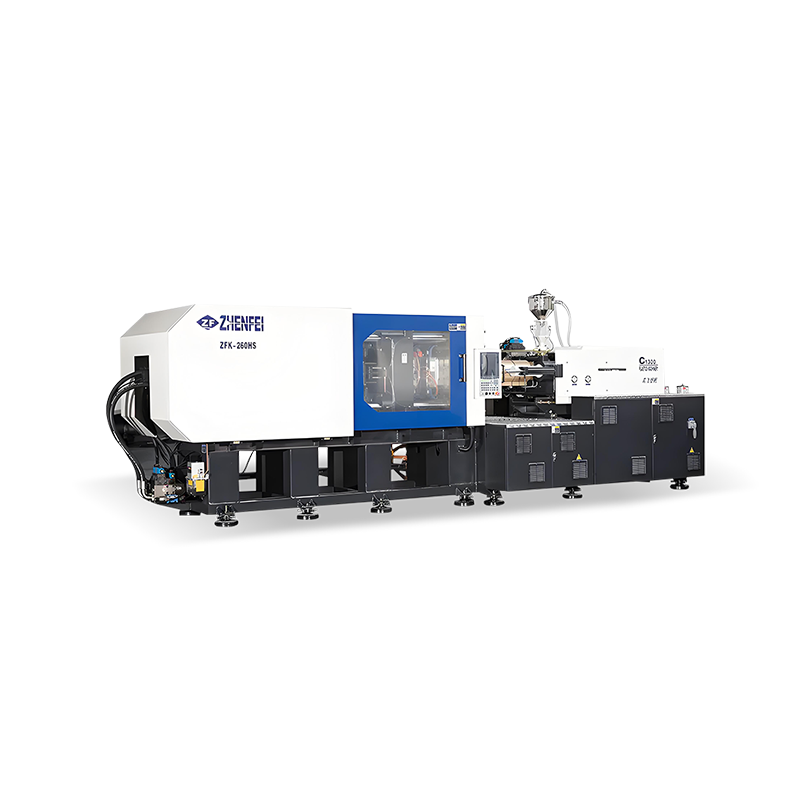
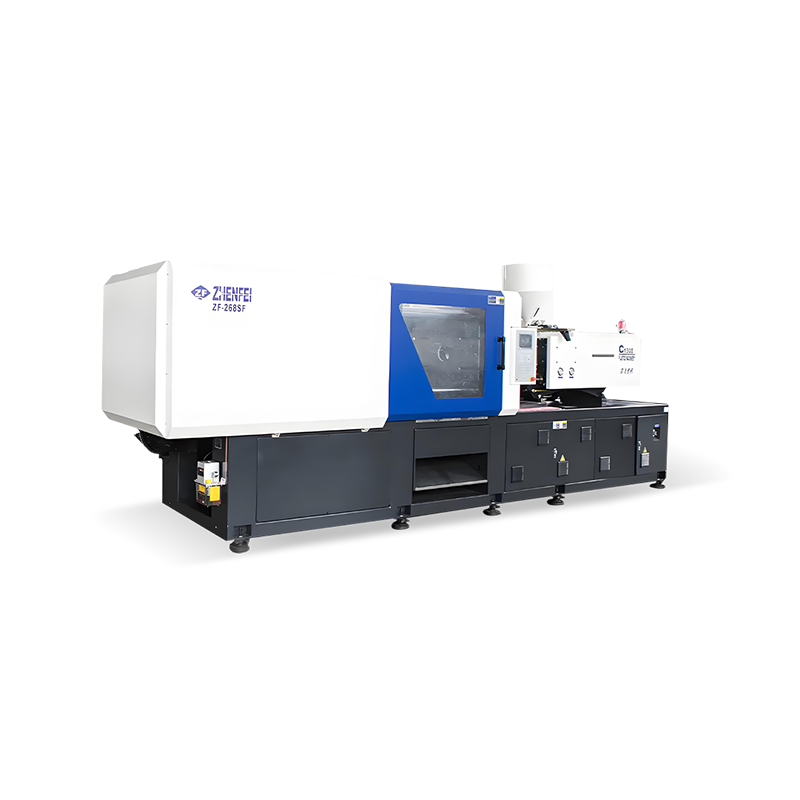
Recommended Products

 Custom Zhenfei Electric Injection Molding Machine Manufacturers
Copyright © Ningbo Zhenfei Injection Molding Machine Manufacturing Co., Ltd. Rights Reserved.
Custom Zhenfei Electric Injection Molding Machine Manufacturers
Copyright © Ningbo Zhenfei Injection Molding Machine Manufacturing Co., Ltd. Rights Reserved.



 中文简体
中文简体 English
 Español
 中文简体
中文简体