Date:May 11, 2026
Content
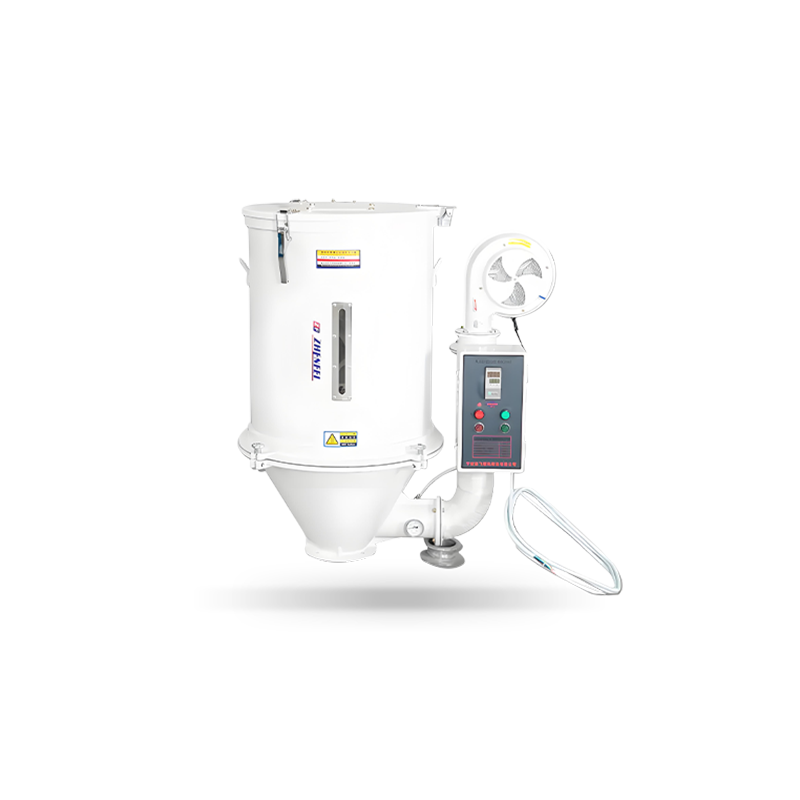
An SDF Hopper Plastic Dryer directly reduces moisture-related defects by pre-drying hygroscopic resins to their required moisture content — typically below 0.02% to 0.05% — before they enter the molding machine. Without proper drying, trapped moisture vaporizes during processing, causing a range of surface and structural defects that lead to part rejection, downtime, and increased scrap costs. The SDF hopper dryer addresses this at the source, delivering consistent, controlled drying that protects part quality across high-volume production runs.
Many engineering-grade plastics are hygroscopic — they absorb moisture from the surrounding environment. When wet resin enters a barrel at temperatures exceeding 200°C, that moisture instantly converts to steam. The result is a range of defects that are often misdiagnosed as machine or tooling problems.
For example, Nylon 6 (PA6) can absorb up to 9% of its weight in moisture under humid conditions. Even at just 0.2% moisture content — still far below saturation — visible splay defects begin appearing on molded parts. This is why precise drying is non-negotiable for hygroscopic materials.
The SDF Hopper Plastic Dryer uses a closed-loop hot air circulation system combined with a molecular sieve desiccant wheel to deliver consistently low dew-point air — typically between -40°C and -60°C — directly into the material hopper. This dry, heated air passes upward through the resin bed, absorbing and carrying away moisture before it can cause processing problems.
Different resins require different drying temperatures and durations. The SDF Hopper Dryer can be configured to meet each material's specific requirements, eliminating guesswork on the production floor.
| Resin Type | Drying Temp (°C) | Drying Time (hrs) | Target Moisture (%) |
|---|---|---|---|
| PET | 160–180 | 4–6 | ≤ 0.005 |
| PA6 / PA66 (Nylon) | 80–90 | 4–8 | ≤ 0.20 |
| PC (Polycarbonate) | 120–125 | 3–4 | ≤ 0.02 |
| ABS | 80–90 | 2–4 | ≤ 0.10 |
| POM (Acetal) | 80–100 | 3–4 | ≤ 0.15 |
| TPU | 80–100 | 2–4 | ≤ 0.05 |
Switching from a conventional hot air dryer or no drying at all to an SDF desiccant hopper dryer produces measurable, immediate improvements in part quality metrics.
Many facilities still rely on standard hot air dryers, which are insufficient for hygroscopic materials — especially in humid climates or during seasonal humidity spikes. The difference in performance is significant.
| Feature | SDF Desiccant Hopper Dryer | Standard Hot Air Dryer |
|---|---|---|
| Dew Point Output | -40°C to -60°C | Ambient (0°C to +20°C) |
| Humidity Independence | Yes — consistent in all climates | No — performance degrades in high humidity |
| Suitable for Hygroscopic Resins | Yes (PA, PET, PC, TPU, POM) | Limited (PP, PE only) |
| Moisture Target Achievement | Reliable — ≤ 0.02% achievable | Unreliable — often fails below 0.1% |
| Defect Risk Reduction | High | Low to Moderate |
| Energy Efficiency | Higher (closed-loop recycling) | Lower (exhausts heated air) |
Even the best SDF Hopper Dryer will underperform if not set up and operated correctly. Follow these practical guidelines to get the most out of your system.
The hopper volume should hold enough resin to supply at least 2–3 times the required drying duration at your machine's consumption rate. For example, if a machine uses 20 kg/hr of PA6 requiring 4 hours of drying, the hopper should hold at least 80–120 kg of material to maintain a continuous, adequately dried supply.
Temperature alone does not guarantee effective drying. Always monitor the supply air dew point using a built-in or inline dew point sensor. If the dew point rises above -30°C, desiccant regeneration may be needed or the system may be undersized for current throughput.
Once dried, resin re-absorbs moisture rapidly. PC, for example, can regain problematic moisture levels within 30 minutes of exposure to 50% relative humidity air. Ensure the hopper-to-throat connection is sealed and that dried material is not left in open containers between shifts.
While any operation processing hygroscopic resins can benefit, certain industries have the most to gain from the precision drying that an SDF Hopper Dryer provides.
Recommended Products

 Custom Zhenfei Electric Injection Molding Machine Manufacturers
Copyright © Ningbo Zhenfei Injection Molding Machine Manufacturing Co., Ltd. Rights Reserved.
Custom Zhenfei Electric Injection Molding Machine Manufacturers
Copyright © Ningbo Zhenfei Injection Molding Machine Manufacturing Co., Ltd. Rights Reserved.



 中文简体
中文简体 English
 Español
 中文简体
中文简体