Date:Aug 17, 2026
Content
Thermal controllers improve product quality and cycle time by maintaining mould or die temperature within a tight range — typically ±1°C to ±3°C — which reduces defects like warpage and sink marks while cutting cycle times by as much as 15–30% compared to uncontrolled or manually adjusted cooling systems. Consistent temperature control is one of the most cost-effective ways manufacturers can boost both throughput and part consistency without investing in new tooling.
What a Thermal Controller Actually Does
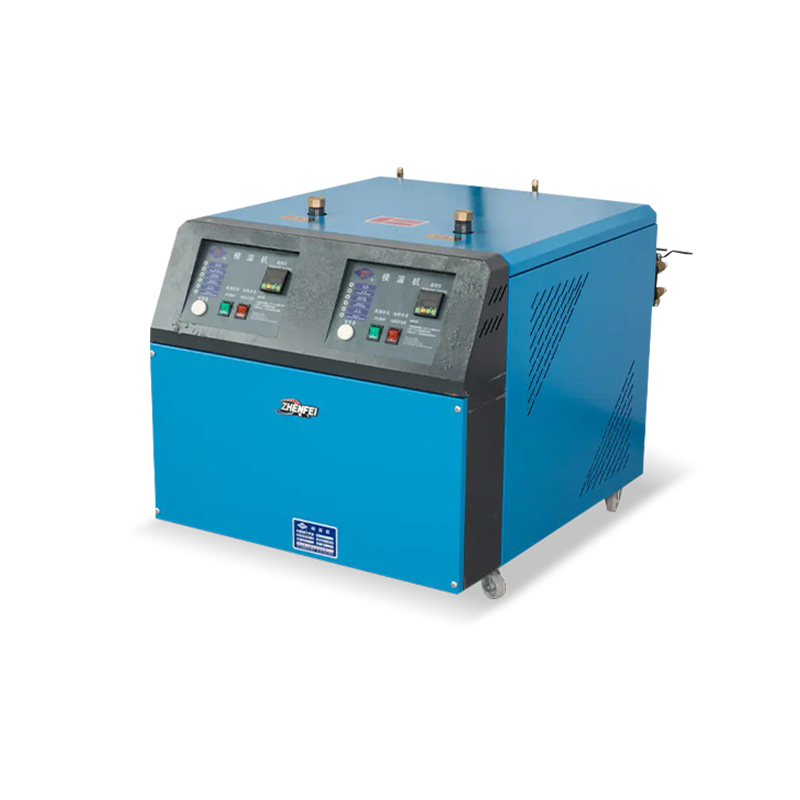
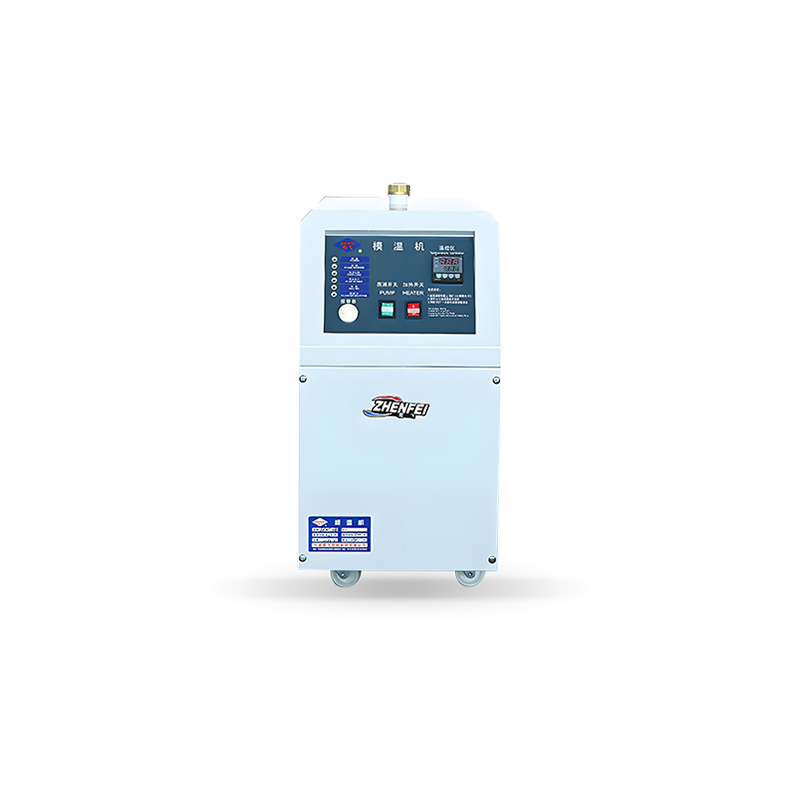
A thermal controller — sometimes called a mould temperature controller (MTC) or die temperature controller — circulates a heat transfer fluid (typically water or thermal oil) through channels in a mould or die, actively heating or cooling to hold the tool at a target temperature. Unlike a basic chiller, which only removes heat, a thermal controller can both add and remove heat as needed, responding dynamically throughout the production cycle.
Most industrial thermal controllers maintain temperature stability within ±1°C, using PID (proportional-integral-derivative) control loops that continuously adjust heating and cooling output based on real-time sensor feedback from the mould.
Uneven mould temperature causes different sections of a part to cool and shrink at different rates, leading to internal stress and warping after ejection. Studies of injection molded parts show that temperature variation of just 5°C across a mould surface can increase warpage by 20–40%, particularly in parts with thin walls or asymmetric geometry.
When mould temperature is too low, material near the surface solidifies too quickly, trapping shrinkage stress beneath the surface and producing visible sink marks. Precise thermal control allows the surface to cool at a rate that matches internal shrinkage, significantly reducing this defect on cosmetic and structural parts alike.
Maintaining a slightly higher mould temperature during filling keeps material flowing longer before it solidifies, allowing separate flow fronts to fuse more completely. This reduces visible weld lines and improves mechanical strength at the joint — a common requirement in structural automotive and enclosure parts.
Cooling is typically the longest phase of any moulding or casting cycle, often accounting for 50–70% of total cycle time. A thermal controller shortens this phase in two ways: by removing heat more efficiently through higher flow rates and better heat transfer fluid selection, and by eliminating temperature drift that would otherwise require conservative (longer) cooling times as a safety margin.
Manufacturers who upgrade from passive water-line cooling to an active thermal controller commonly report cycle time reductions of 15–30%, since the system can hold the mould at the optimal temperature for fast, consistent heat extraction rather than gradually drifting warmer over a production run.
| Metric | Without Thermal Controller | With Thermal Controller |
|---|---|---|
| Mould temperature variation | ±5–10°C | ±1–3°C |
| Defect rate (warpage/sink marks) | 5–10% | 1–3% |
| Cycle time | Baseline | 15–30% shorter |
| Part-to-part consistency | Moderate drift over shift | Stable across full production run |
The type of thermal controller also affects achievable quality and speed gains:
Selecting the wrong fluid type is a common reason manufacturers fail to see expected cycle time gains — water systems used beyond their safe operating range can flash to steam, causing unstable pressure and inconsistent heat transfer.
For most production operations, the payback period for a thermal controller upgrade is calculated by combining two savings sources: reduced scrap from defects and increased throughput from shorter cycles. A facility running 100,000 cycles per year with a 20% cycle time reduction can gain the equivalent of 20,000 additional production cycles annually — without adding machine hours or labor.
When combined with even a modest 3–5% reduction in scrap rate, many manufacturers recover the cost of a thermal controller upgrade within 12 to 18 months of continuous production.
Thermal controllers directly influence two of the most important metrics in manufacturing: part quality and production speed. By holding mould temperature within a tight, consistent range, they reduce common defects like warpage, sink marks, and weld line weakness, while simultaneously shortening the cooling phase that dominates most production cycles. For manufacturers looking to improve both output and consistency without retooling, upgrading thermal control systems remains one of the highest-return investments available.
Recommended Products

 Custom Zhenfei Electric Injection Molding Machine Manufacturers
Copyright © Ningbo Zhenfei Injection Molding Machine Manufacturing Co., Ltd. Rights Reserved.
Custom Zhenfei Electric Injection Molding Machine Manufacturers
Copyright © Ningbo Zhenfei Injection Molding Machine Manufacturing Co., Ltd. Rights Reserved.



 中文简体
中文简体 English
 Español
 中文简体
中文简体