Date:Aug 24, 2026
Content
Air-cooled chillers reject heat directly into the surrounding air and are best suited for facilities without water infrastructure or cooling towers, while water-cooled chillers use a separate condenser water loop and typically operate 10–20% more energy-efficiently — making them the preferred choice for large, continuous industrial operations where long-term energy savings outweigh the higher upfront installation cost. The right choice depends on facility size, climate, available infrastructure, and total cost of ownership over the chiller's lifespan.
How Air-Cooled Chillers Work
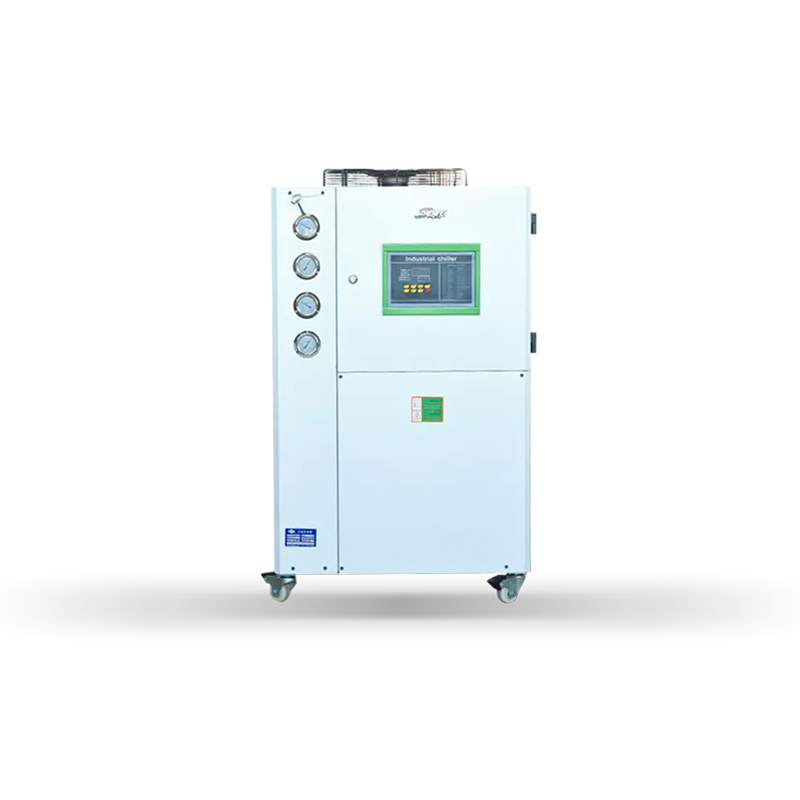
Air-cooled chillers use a condenser coil and fans to reject heat directly into the surrounding ambient air, eliminating the need for a separate water source or cooling tower. Refrigerant absorbs heat from the process water loop, then releases that heat into the air as it passes through the outdoor condenser coil.
Because they require no external water supply, air-cooled chillers are typically 20–30% cheaper to install than water-cooled systems, since there's no need for cooling towers, water treatment systems, or additional plumbing infrastructure.
Water-cooled chillers use a separate condenser water loop, typically connected to a cooling tower, to reject heat. Because water has a much higher heat capacity than air, this method removes heat more efficiently, especially in hot or humid climates where air-cooled systems struggle to reject heat effectively.
Water-cooled chillers generally achieve 10–20% better energy efficiency (measured in kW per ton of cooling) compared to air-cooled units of similar capacity, because condenser water temperatures stay more stable and lower than ambient air temperatures, particularly during summer months.
| Factor | Air-Cooled Chiller | Water-Cooled Chiller |
|---|---|---|
| Installation cost | Lower (no cooling tower needed) | Higher (requires tower, piping, water treatment) |
| Energy efficiency | Moderate; drops in high ambient heat | 10–20% more efficient overall |
| Water usage | None | Requires ongoing water supply and treatment |
| Maintenance complexity | Lower; fewer components | Higher; tower and water treatment upkeep needed |
| Space requirements | Outdoor unit, no tower footprint | Requires space for cooling tower |
| Performance in hot climates | Reduced capacity above 35°C ambient | Stable performance regardless of ambient air temp |
| Typical best fit | Small to mid-size facilities, limited infrastructure | Large, continuous industrial operations |
Ambient temperature has a direct effect on air-cooled chiller performance. For every 1°C increase in ambient air temperature above the rated design point, an air-cooled chiller's cooling capacity can drop by approximately 1–2%, meaning facilities in hot climates may need to oversize air-cooled units to maintain reliable output during peak summer conditions.
Water-cooled chillers are less affected by ambient swings since the condenser water loop stays relatively stable through the cooling tower's evaporative process. This makes water-cooled systems the standard choice for large facilities — typically above 200 tons of cooling capacity — where consistent year-round performance justifies the added infrastructure.
Maintenance centers mainly on keeping condenser coils clean and free of dust or debris, since airflow restriction is the leading cause of reduced efficiency and compressor strain in outdoor units.
These systems require more involved upkeep, including regular water treatment to prevent scale buildup and bacterial growth (such as Legionella) in the cooling tower, along with periodic condenser tube cleaning. Untreated cooling tower water can reduce heat transfer efficiency by up to 30% within a year due to mineral scale accumulation on condenser surfaces.
While air-cooled chillers cost less to install, water-cooled systems often win on long-term operating cost for large, continuously running operations. A facility running a 300-ton chiller nearly year-round could see annual energy savings of 10–20% by switching to water-cooled equipment — savings that can offset the higher installation cost within 3 to 5 years, depending on local electricity rates and water costs.
For smaller operations or intermittent use, the lower installation cost and simpler maintenance of air-cooled chillers usually make them the more economical choice overall, since the efficiency gap matters less at lower total running hours.
Choose an air-cooled chiller if your facility lacks water infrastructure, operates in a moderate climate, has limited space for a cooling tower, or runs cooling loads intermittently rather than continuously. Choose a water-cooled chiller if you're operating a large facility with high, continuous cooling demand, have access to reliable water supply and treatment, and want to minimize long-term energy costs even at a higher upfront investment.
Both air-cooled and water-cooled industrial chillers can reliably support manufacturing processes, but they serve different operational needs. Air-cooled systems offer simplicity, lower installation cost, and easier maintenance, while water-cooled systems deliver better energy efficiency and more stable performance for large-scale, continuous operations. Evaluating your facility's size, climate, water access, and run-time patterns will point clearly toward the better long-term investment.
Recommended Products

 Custom Zhenfei Electric Injection Molding Machine Manufacturers
Copyright © Ningbo Zhenfei Injection Molding Machine Manufacturing Co., Ltd. Rights Reserved.
Custom Zhenfei Electric Injection Molding Machine Manufacturers
Copyright © Ningbo Zhenfei Injection Molding Machine Manufacturing Co., Ltd. Rights Reserved.



 中文简体
中文简体 English
 Español
 中文简体
中文简体