Date:Jun 29, 2026
Content
The key difference between pulverising recycling machines and granulators is particle output size: pulverisers reduce plastic to a fine powder, typically 20-80 mesh (roughly 0.18-0.85mm), while granulators produce coarser flakes or pellets, typically 3-10mm in size. Choosing the wrong equipment for your downstream process can result in material that's unusable for your specific manufacturing method, whether that's rotational molding, injection molding, or extrusion.
Below, we compare these two machine types across output size, mechanism, energy use, and the specific recycling applications each is best suited for.
Plastic recycling typically involves multiple size-reduction stages, and many operations actually use both machine types in sequence — a granulator first reduces bulk material into manageable flakes, followed by a pulveriser that further refines those flakes into fine powder for specific applications like rotomolding or powder coating.
Using only a granulator when your process requires fine powder (or vice versa) means your output simply won't work for the intended downstream application, regardless of how efficiently the machine itself operates.
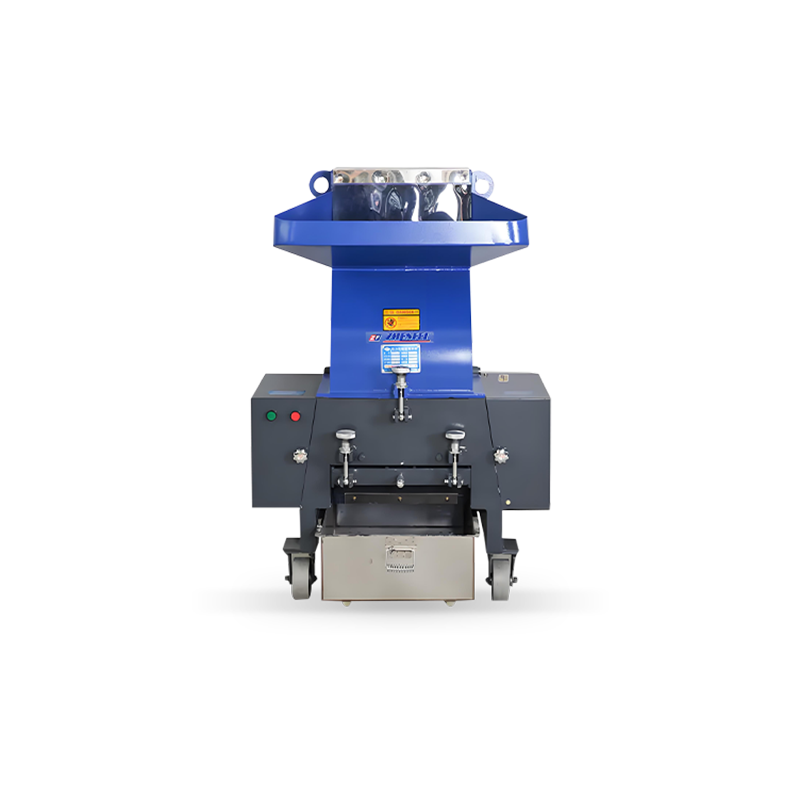
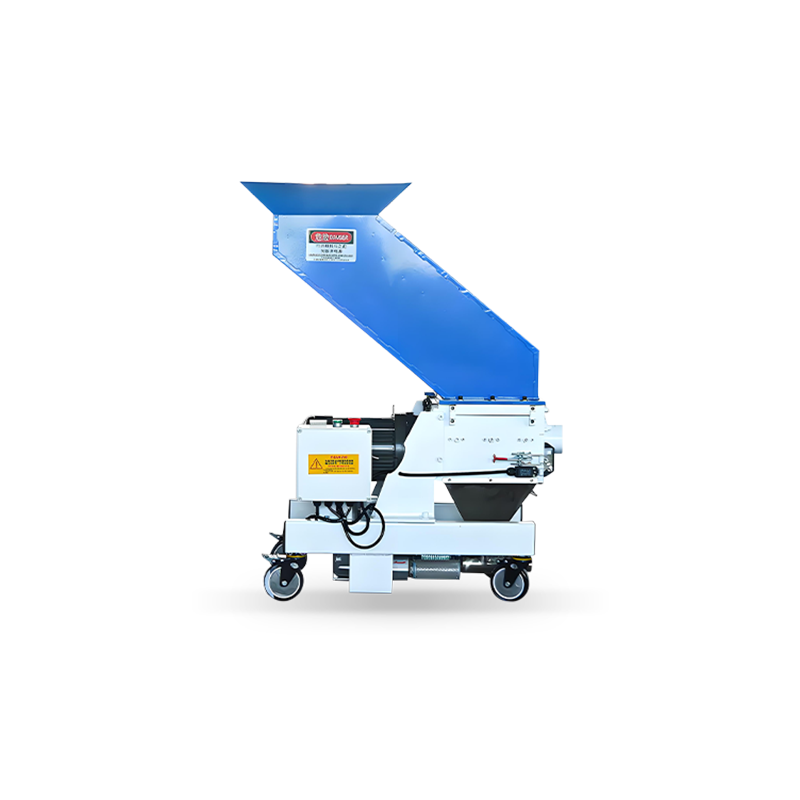
Granulators use rotating blades (rotor knives) that cut against fixed stationary blades (bed knives) to shred plastic into smaller pieces. Material is fed into a cutting chamber and repeatedly cut until it passes through a screen of a specified mesh size, determining the final flake size.
Pulverisers use a different mechanism — typically a high-speed grinding disc or hammer mill system — to repeatedly impact and friction-grind material down to a fine powder. The intense mechanical action generates significant heat, which is why many pulverisers include cooling or heat-management systems.
The table below summarizes the core differences between these two machine types across output, mechanism, and ideal use cases.
| Feature | Granulator | Pulveriser |
|---|---|---|
| Output Size | 3-10mm flakes | 20-80 mesh fine powder |
| Cutting Mechanism | Rotor/bed knife shearing | Grinding disc or hammer mill |
| Energy Use | Lower per pound processed | 30-50% higher per pound processed |
| Heat Generation | Minimal | Significant, may require cooling |
| Typical Use | Regrind for injection molding/extrusion | Rotomolding, powder coating |
For operations that need fine powder output from bulky scrap material, the most efficient approach is typically a two-stage process: granulate first, then pulverise. Feeding bulky scrap directly into a pulveriser without pre-sizing can overload the grinding mechanism and significantly reduce throughput.
By granulating material into uniform 3-10mm flakes first, the subsequent pulverising stage operates more efficiently and produces a more consistent final powder, since the feed material is already a manageable, uniform size.
Before selecting either machine type, evaluate the following:
If your downstream process requires coarse flakes for reuse in injection molding or extrusion, a granulator is the appropriate and more energy-efficient choice. If your application — such as rotomolding or powder coating — requires fine powder, a pulveriser is necessary, and should ideally be fed pre-sized material from a granulator for optimal efficiency.
For operations processing bulky scrap into fine powder, investing in both machines as a two-stage system typically delivers more consistent output and higher overall throughput than relying on a single pulveriser alone.

 Custom Zhenfei Electric Injection Molding Machine Manufacturers
Copyright © Ningbo Zhenfei Injection Molding Machine Manufacturing Co., Ltd. Rights Reserved.
Custom Zhenfei Electric Injection Molding Machine Manufacturers
Copyright © Ningbo Zhenfei Injection Molding Machine Manufacturing Co., Ltd. Rights Reserved.



 中文简体
中文简体 English
 Español
 中文简体
中文简体