Date:Jan 19, 2026
Content
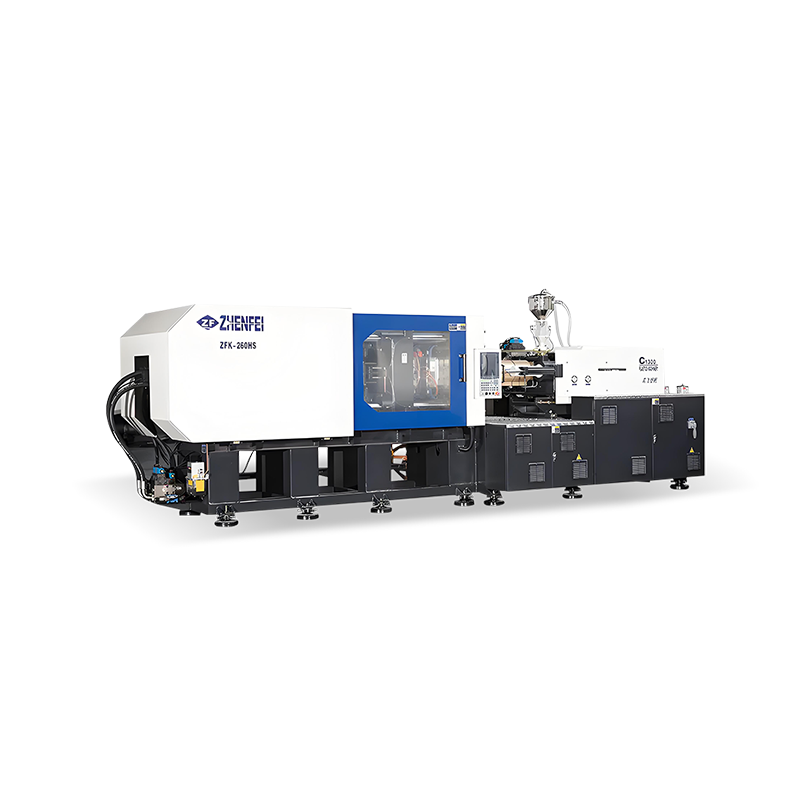
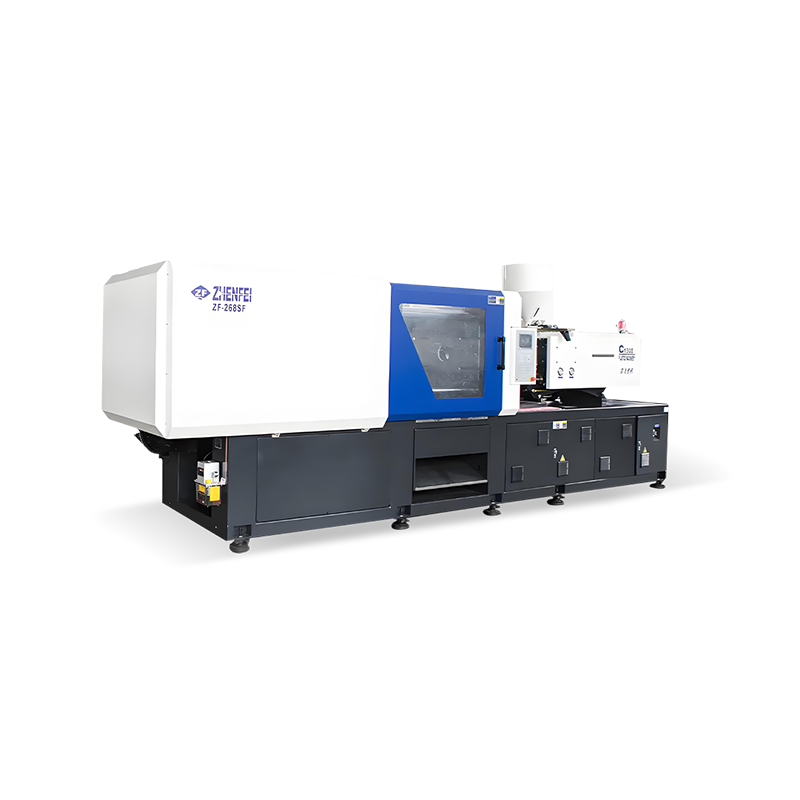
Injection molding machines are a cornerstone of modern industrial manufacturing, particularly in high-volume plastic production. Their ability to deliver repeatable quality, high output rates, and low unit costs makes them indispensable across industries such as automotive, electronics, medical devices, packaging, and consumer goods. By combining automation, precision control, and advanced process monitoring, injection molding machines significantly enhance both production efficiency and product consistency. The following sections explain these advantages in detail.
High-level automation is one of the most significant contributors to the efficiency of injection molding machines. Unlike traditional manufacturing methods that rely heavily on manual labor, injection molding integrates multiple production steps—material feeding, melting, injection, cooling, mold opening, and part ejection—into a fully automated cycle. Once the machine parameters are set, production can run continuously with minimal operator involvement.
This automation dramatically reduces human error, which is a common source of inconsistency in manual or semi-automatic processes. Parameters such as injection pressure, temperature, and cycle time remain stable across thousands of cycles, ensuring uniform product quality. Operators are primarily responsible for supervision, quality checks, and preventive maintenance rather than repetitive physical tasks.
From an efficiency perspective, automation allows injection molding machines to operate 24/7, including overnight or weekend shifts. This capability is especially valuable for manufacturers aiming to maximize equipment utilization and meet large-volume orders within tight delivery schedules. Automated systems also reduce labor costs and improve workplace safety by minimizing direct human interaction with high-temperature or high-pressure processes.
In addition, modern injection molding machines often support robotic arms, automated conveyors, and vision inspection systems. These add-ons further streamline production by enabling automatic part removal, sorting, and packaging. As a result, manufacturers achieve higher output with fewer resources while maintaining consistent quality standards across all production batches.
Injection molding machines are specifically engineered for short, repeatable cycle times, making them ideal for mass production. A single cycle—covering injection, cooling, and ejection—can take anywhere from a few seconds to a few minutes, depending on part size and complexity. Advanced heating systems, optimized screw designs, and efficient mold cooling channels all contribute to reducing cycle duration.
Short cycle times directly translate into higher production efficiency. When thousands of identical parts can be produced per hour, manufacturers benefit from economies of scale and significantly lower per-unit costs. This is one of the key reasons injection molding is widely used for large-volume plastic components such as connectors, housings, packaging containers, and medical disposables.
Consistency also improves with shorter, stable cycles. Because the process conditions remain nearly identical from one cycle to the next, dimensional accuracy and material properties are maintained throughout the production run. Variations in wall thickness, surface finish, or mechanical strength are minimized, reducing scrap rates and rework requirements.
Furthermore, modern machines allow manufacturers to fine-tune cycle parameters based on real-time data. Adjustments to cooling time or holding pressure can be made to optimize part quality without significantly affecting output speed. This balance between speed and precision ensures that manufacturers do not have to sacrifice consistency for efficiency, achieving both simultaneously.
Precision control is at the heart of product consistency in injection molding. Modern injection molding machines are equipped with advanced PLC or CNC control systems that regulate every critical process parameter with high accuracy. These include barrel temperature, mold temperature, injection speed, holding pressure, back pressure, and cooling time.
Once optimal parameters are established through testing and validation, they can be stored and repeatedly applied across production runs. This repeatability ensures that every molded part conforms to the same specifications, even when produced weeks or months apart. Such consistency is essential in industries like medical devices and automotive manufacturing, where strict tolerances and regulatory compliance are required.
Accurate control also helps prevent common molding defects such as short shots, warpage, sink marks, burn marks, and flash. Sensors continuously monitor pressure and temperature, allowing the machine to detect deviations in real time. When abnormalities occur, the system can trigger alarms or automatically adjust parameters to maintain quality.
In addition, multi-zone temperature control and servo-driven systems further enhance precision. Servo motors provide smoother and more responsive movement compared to traditional hydraulic systems, resulting in better control over injection speed and pressure. This level of precision ensures uniform material flow, consistent part density, and stable mechanical properties across all products.
| Aspect | Injection Molding Machine | Traditional Manufacturing |
|---|---|---|
| Production Speed | Extremely fast, short cycles | Slower, labor-dependent |
| Process Consistency | Highly repeatable | Operator-dependent |
| Dimensional Accuracy | Very high | Moderate |
| Labor Requirement | Low | High |
| Scrap Rate | Low | Higher |
| Suitability for Mass Production | Excellent | Limited |
Repeatability is a defining advantage of injection molding machines, directly contributing to reduced waste and higher production efficiency. Because each cycle follows the same controlled process, variations in material usage, part weight, and dimensions are kept to a minimum. This stability results in lower rejection rates and less material waste.
Material efficiency is further improved by the ability to recycle certain types of scrap. Runners, sprues, and rejected parts can often be reground and reused without significantly affecting product quality, depending on the material. This not only reduces raw material costs but also supports sustainable manufacturing practices.
Injection molding machines also minimize rework. Since parts are produced to near-net shape, little to no secondary processing is required. This contrasts with machining or forming processes that may require additional finishing steps. Reduced rework saves time, labor, and energy, all of which contribute to improved overall efficiency.
Moreover, modern machines feature real-time monitoring and statistical process control (SPC). These systems analyze production data continuously, identifying trends that could lead to defects. By addressing issues early, manufacturers can prevent large-scale quality problems, ensuring stable output and consistent product quality throughout the production cycle.
The integration of injection molding machines with smart manufacturing systems is becoming increasingly common in Industry 4.0 environments. Modern machines are designed to connect with Manufacturing Execution Systems (MES), Enterprise Resource Planning (ERP) systems, and cloud-based platforms for data collection and analysis.
This connectivity allows manufacturers to monitor machine performance, energy consumption, cycle times, and defect rates in real time. By analyzing this data, companies can identify inefficiencies, predict maintenance needs, and optimize production schedules. Predictive maintenance, in particular, reduces unexpected downtime and helps maintain consistent output quality.
Smart systems also enhance consistency by enabling centralized control and standardization across multiple machines or production lines. Parameter recipes can be shared and applied uniformly, ensuring that parts produced on different machines meet the same quality standards.
Additionally, data-driven optimization enables continuous improvement. AI and machine learning algorithms can analyze historical production data to recommend optimal process settings, further improving efficiency and consistency. As a result, injection molding machines evolve from standalone equipment into intelligent production units that support long-term manufacturing excellence.
Q1: Why are injection molding machines considered highly efficient for mass production?
Because they offer short cycle times, automation, and high repeatability, allowing thousands of identical parts to be produced quickly and cost-effectively.
Q2: How do injection molding machines ensure consistent quality?
They use precise control systems to regulate temperature, pressure, and timing, ensuring stable production conditions across all cycles.
Q3: Can injection molding machines reduce material waste?
Yes. Repeatable processes, low defect rates, and the ability to recycle certain scrap materials significantly reduce waste.
Q4: Are injection molding machines suitable for high-precision industries?
Absolutely. They are widely used in medical, automotive, and electronics industries due to their high dimensional accuracy and consistency.
Q5: How does smart manufacturing improve injection molding efficiency?
Smart systems enable real-time monitoring, predictive maintenance, and data-driven optimization, reducing downtime and improving output stability.
Recommended Products

 Custom Zhenfei Electric Injection Molding Machine Manufacturers
Copyright © Ningbo Zhenfei Injection Molding Machine Manufacturing Co., Ltd. Rights Reserved.
Custom Zhenfei Electric Injection Molding Machine Manufacturers
Copyright © Ningbo Zhenfei Injection Molding Machine Manufacturing Co., Ltd. Rights Reserved.



 中文简体
中文简体 English
 Español
 中文简体
中文简体